
The Polish Institute of Arts and Sciences of America (PIASA) is a prestigious Polish-American academic institution headquartered in New York, founded in 1942 by prominent expatriated Polish scientists (such as Bronisław Malinowski and Oskar Halecki). One of its primary goals is to propagate knowledge of Poland and Polish culture in the USA, as well as to integrate international academia.
The institute regularly confers awards celebrating exceptional contributions of scientists, researchers, and creators – mainly those of Polish heritage or working on the topic of Poland.
In the area of hard and applied sciences, PIASA awards to distinctions:
The Casimir Funk Natural Sciences Award – granted to scientist for exceptional contribution to the development of natural sciences, medicine, or biology.
The Tadeusz Sendzimir Applied Sciences Award – granted to engineers and scientists for exceptional achievements in such fields as computer science, material science, and artificial intelligence.
Laureates of PIASA’s awards in 2025
👉 source: https://piasa.org/awards/
The Casimir Funk Natural Sciences Award:
Prof. Krzysztof M. Górski
Secretary general of the Nicolaus Copernicus Academy in Warsaw – he is and internationally renowned Polish astronomer and cosmologist, who has spent years of his career at NASA’s prestigious Jet Propulsion Lab and the California Institute of Technology (Caltech) in Pasadena.
Professor Górski is one of the world-leading scientist researching microwave background radiation – the relic of the beginnings of the Universe. He is the cocreator of the historic success of the COBE and Planck space missions.
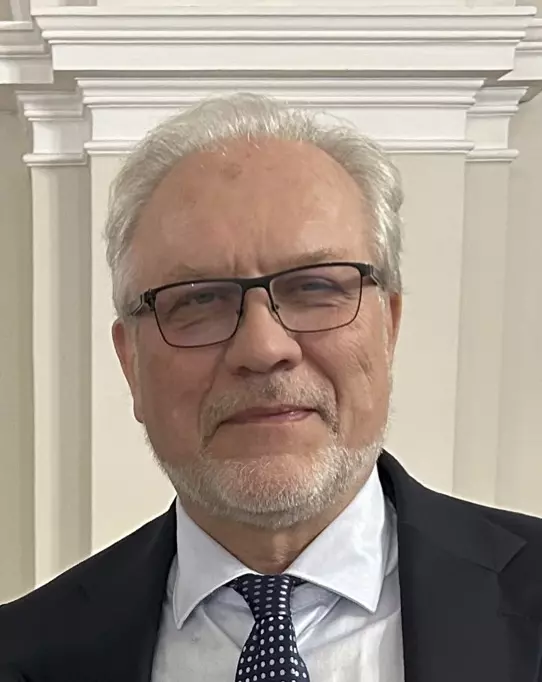
The Tadeusz Sendzimir Applied Sciences Award:
Prof. Teresa J. Bandosz
The prominent professor of chemistry and chemical engineering at the City College of New York (CCNY) is a world-class expert in the field of carbon materials and adsorption processes.
Beside hard sciences, PIASA also honours exceptional achievements in many other fields. PIASA’s awards are granted also in fields encompassing the humanities, social sciences, Polish and East-Central Europe, as well as Polish-Jewish studies. The institute also celebrates the best scientific publications issued in The Polish Review, as well as activities for the promotion of democracy and the rule of law, and grants special awards for the totality of one’s life achievements.
The Karol Pilarczyk Foundation Award for the promotion of democracy and the rule of law:
Dr. Anna Husarska and Leszek Jażdżewski
Dr. Anna Husarska and Leszek Jażdżewski
Dr. Husarska is a writer, journalist, and activist; Leszek Jażdżewski is a founder and editor in chief of the “Liberté!” magazine.
The Ludwik Krzyżanowski Polish Review Award for best article:
Dr. Colin P. Neufeldt and Dr. Wojciech Marchlewski
Dr. Neufeldt from Concordia University of Edmonton and Dr. Marchlewski of the Masovian Museum in Płock have been awarded for their article “Escape to Freedom and Return to Bondage: A Case Study of the Flight of Mennonites from Deutsch Wymyschle and Gąbin, Poland, in Early 1945” in The Polish Review, vol. 69, no. 3, 2024.
Also honoured were Dr. Andrzej Pieczewski of the University of Łódź and Dr. Aliaksandra Sidarava of the Polish Academy of Sciences in Warsaw for their article “The Polish Diaspora in Belarus: Functioning under the Lukashenko Regime” in The Polish Review, vol. 69, no. 3, 2024.
The Oskar Halecki Polish History Award:
Dr. Jacob Flaws
Dr. Flaws of Kean University has received the award for the book Spaces of Treblinka: Retracing a Death Camp, published in Lincoln by University of Nebraska Press in 2024.
The Bronisław Malinowski Award in the Social Sciences:
Dr. Agnieszka Pasieka
Dr. Pasieka of the Université de Montréal has been honoured for the book Living Right: Far-Right Youth Activists in Contemporary Europe, published in Princeton, New Jersey, by Princeton University Press, 2024.
The Wacław Lednicki Humanities Award:
Dr. Anna Parkitna
Dr. Parkitna of the Institute of Polish Art of the Polish Academy of Sciences has received the award for the book “Opera in Warsaw: A City of the European Enlightenment”, published in New York by Cambridge University Press in 2024.
Also recognized were Dr. Elżbieta Ostrowska of the University of Łódź for the book ReFocus: The Films of Agnieszka Holland, published in Edinburgh by the Edinburgh University Press in 2024, and Dr. Karen Underhill of the University of Illinois in Chicago for the book Bruno Schulz and Galician Jewish Modernity, published in Bloomington by Indiana University Press in 2024.
The Rachel Feldhay Brenner Award in Polish-Jewish Studies:
Dr. Waitman Wade Beorn
Dr. Beorn of Northumbria University has been honoured for the book Between the Wires: The Janowska Camp and the Holocaust in Lviv, published in Lincoln, Nebraska, by University of Nebraska Press in 2024.
The Susanne M. Lotarski Distinguished Achievement Award:
Dr. Jan Tomasz Gross
Dr. Gross in professor emeritus at the Norman B. Tomlinson Chamber of War and Society of the Princeton University Department of History.