
New
Releases
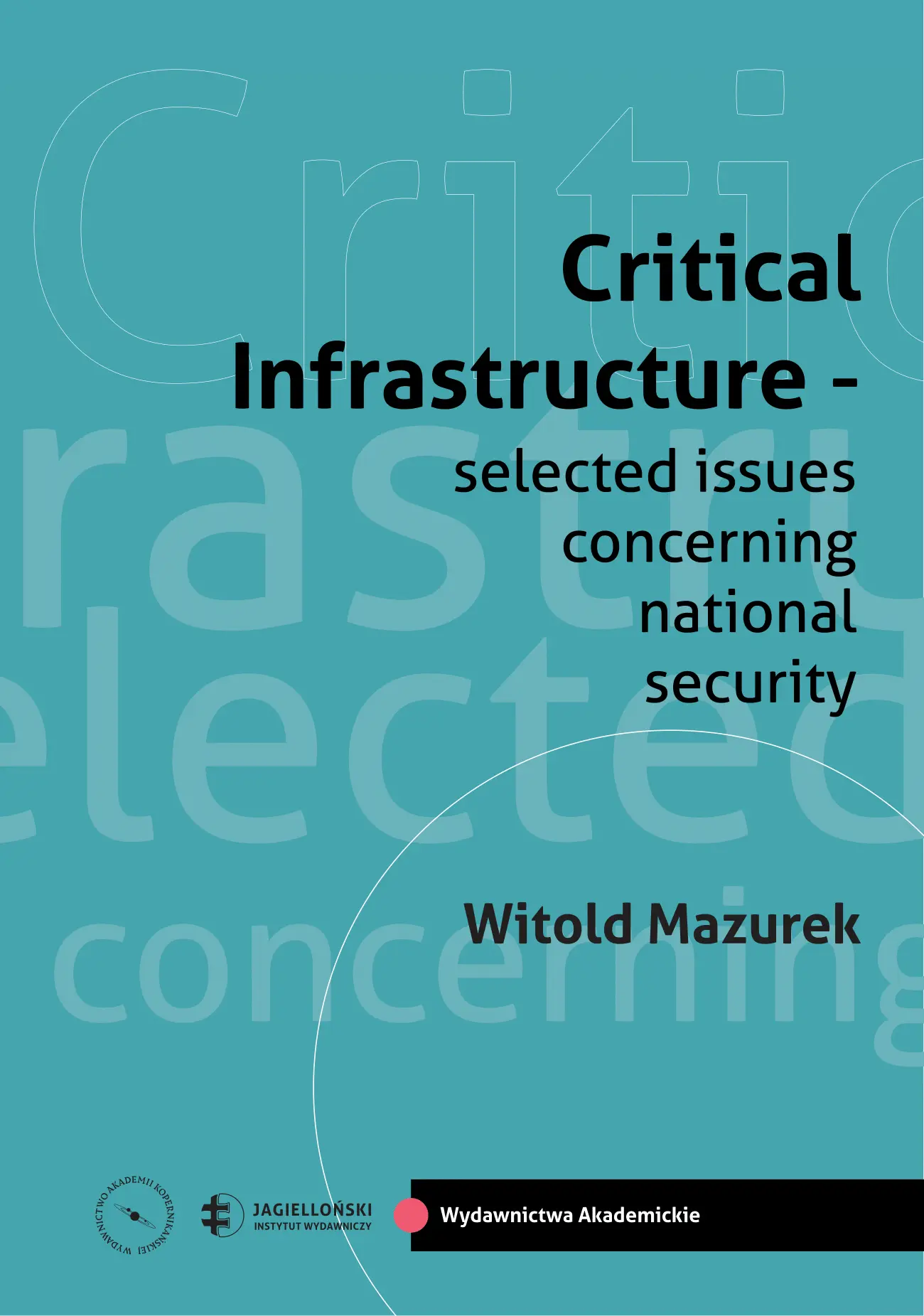
Critical Infrastructure – selected issues concerning national security
This publication represents an important contribution to the debate on the strategic challenges facing Poland in an era of growing hybrid threats, cyberattacks, and international instability, in which ensuring the continuity of key state systems is paramount. The work is a comprehensive analysis of the current legal and organizational status of critical infrastructure (CI) protection in Poland, presenting both strengths and identifying gaps in the system. Its key and innovative element is the proposal to establish a new, specialized unit – the Critical Infrastructure Protection Service (CIPS). The work is a valuable study not only for security theorists but, above all, for practitioners and decision-makers responsible for shaping the foundations of Poland’s national security.
Witold Mazurek – habilitated doctor in security sciences, professor at the Ignatianum University in Krakow. Since April 25, 2023, Director of the Copernican Academy Office. His research interests focus on security issues, with particular emphasis on critical infrastructure.
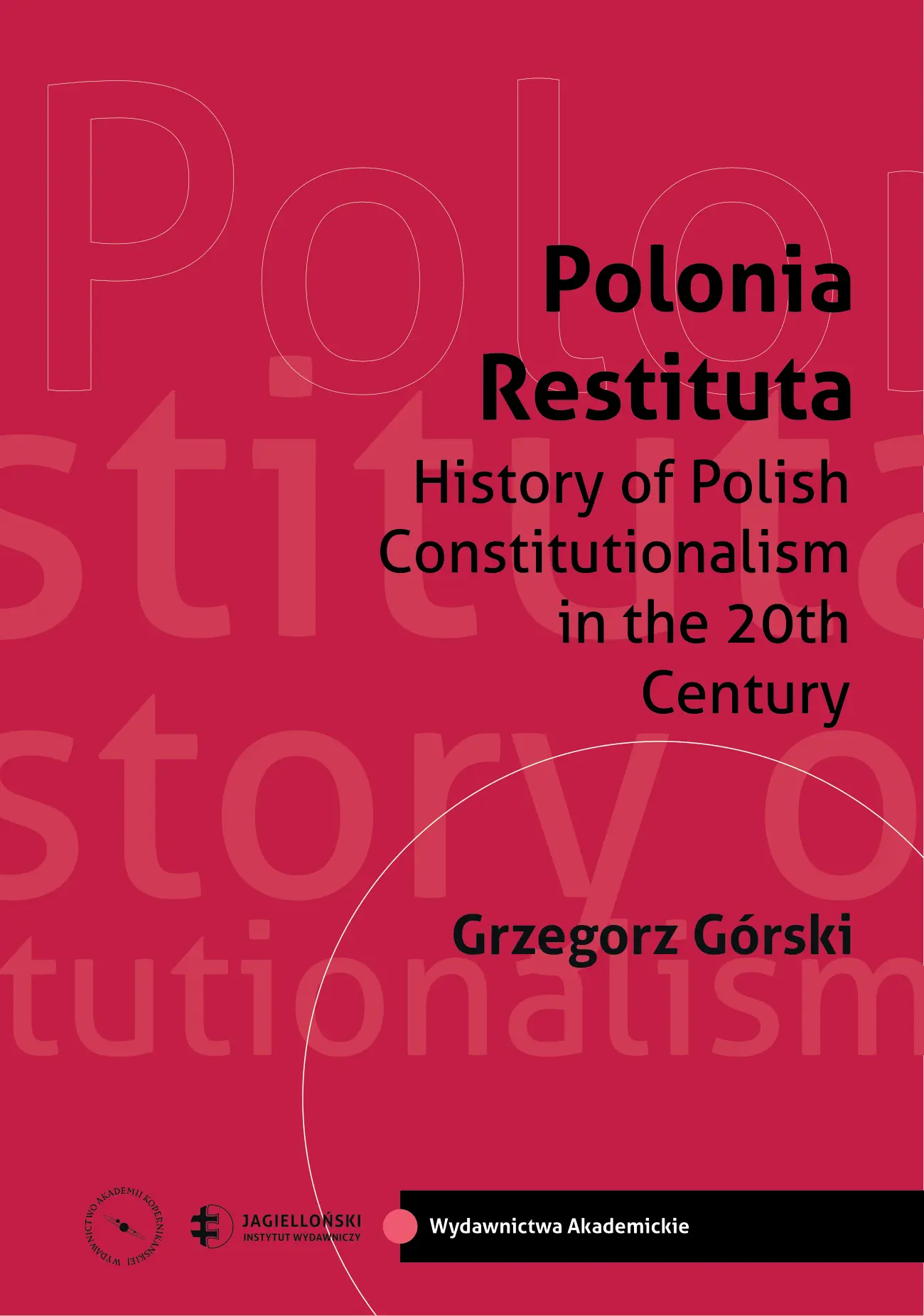
Polonia Restituta. History of Polish Constitutionalism in the 20th Century
The monograph discusses the sources of contemporary problems facing Polish democracy, the mistakes made by Polish elites throughout the 20th century, and provides an important voice in the discussion on the contemporary challenges to the Polish-Lithuanian Commonwealth’s political system. The author emphasizes that many of Poland’s contemporary problems stem from unresolved historical issues, which he terms “ticking time bombs.” Grzegorz Górski argues that Polish political elites, both after 1918 and after 1989, abandoned building a state based on their own rich constitutional traditions and instead were guided by “incomprehensible complexes,” adopting French and later German models. These solutions, according to the author, were contrary to the Polish experience of libertarian constitutionalism and the spirit of the Polish nation. He points out that even the 1935 Constitution, which attempted to draw on indigenous elements, failed to live up to expectations. This publication provides an important voice in the debate on contemporary challenges to the political system.
Grzegorz Górski – habilitated doctor of law, professor at, among others, the John Paul II Catholic University of Lublin and the Toruń University of Applied Sciences – Jagiellonian College, lawyer and advocate, former Plenipotentiary for Organizational Affairs of the Copernican Academy.
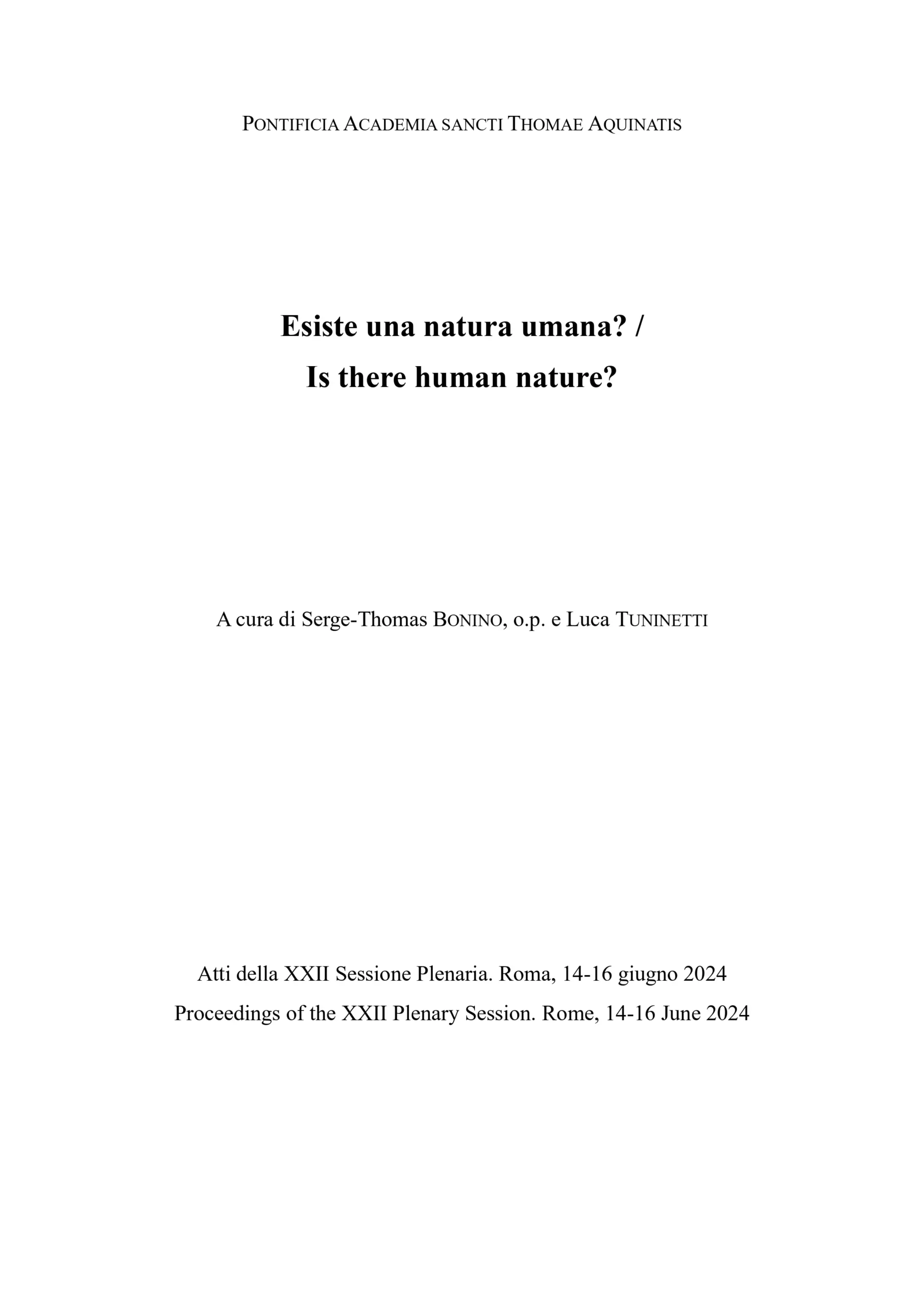
Esiste una natura umana?
Is there human nature?
“Is There Human Nature?”
The essays address themes such as the rejection or distortion of human nature, and behaviors that betray or undermine it, while also proposing possible remedies.
Another group of contributions examines the tension within the human person between aspects of human nature and culture, or between the desire for God and the integrity of created nature.
Several authors reflect on the wounds of human nature, the direction of human development, and offer a definition of friendship in the context of either poverty or human fulfillment.
The collection concludes with an analysis of the sexual nature of the resurrected body according to the theology of Thomas Aquinas.
The volume is currently in editing.
June 14–16, 2024 – International Academic Conference „Esiste una natura umana ?” hosted at the Pontifical University of Saint Thomas Aquinas (Angelicum), Rome
Conference program „Esiste una natura umana?”
Conference Proceedings:
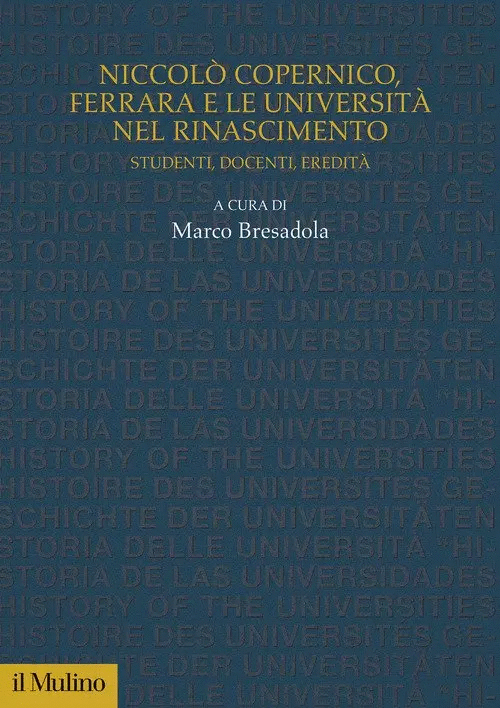
Niccolò Copernico
Ferrara e le università nel Rinascimento
edited by MARCO BRESADOLA
A major portion of the essays focuses on the academic and cultural environment of Ferrara during the 15th and 16th centuries, particularly the life and organization of the Este University, where Copernicus earned his doctorate in canon law in May 1503.
Other essays discuss the universities of Bologna and Padua, where the Polish astronomer also studied, gaining knowledge in medicine, natural sciences, and law.
Additional contributions examine the scientific significance of Copernicus’s work and its influence on modern and contemporary thought, with references to figures such as Giordano Bruno, Galileo, Kant, and the Encyclopedists.
ISBN: 978-88-15-39104-9
Publication year: 2024
About the Editor
His research focuses on the history of biological and medical sciences in the early modern period, with particular attention to scholars such as Marcello Malpighi and Luigi Galvani.
Book available on the il Mulino Publishing House website
Conference Proceedings:
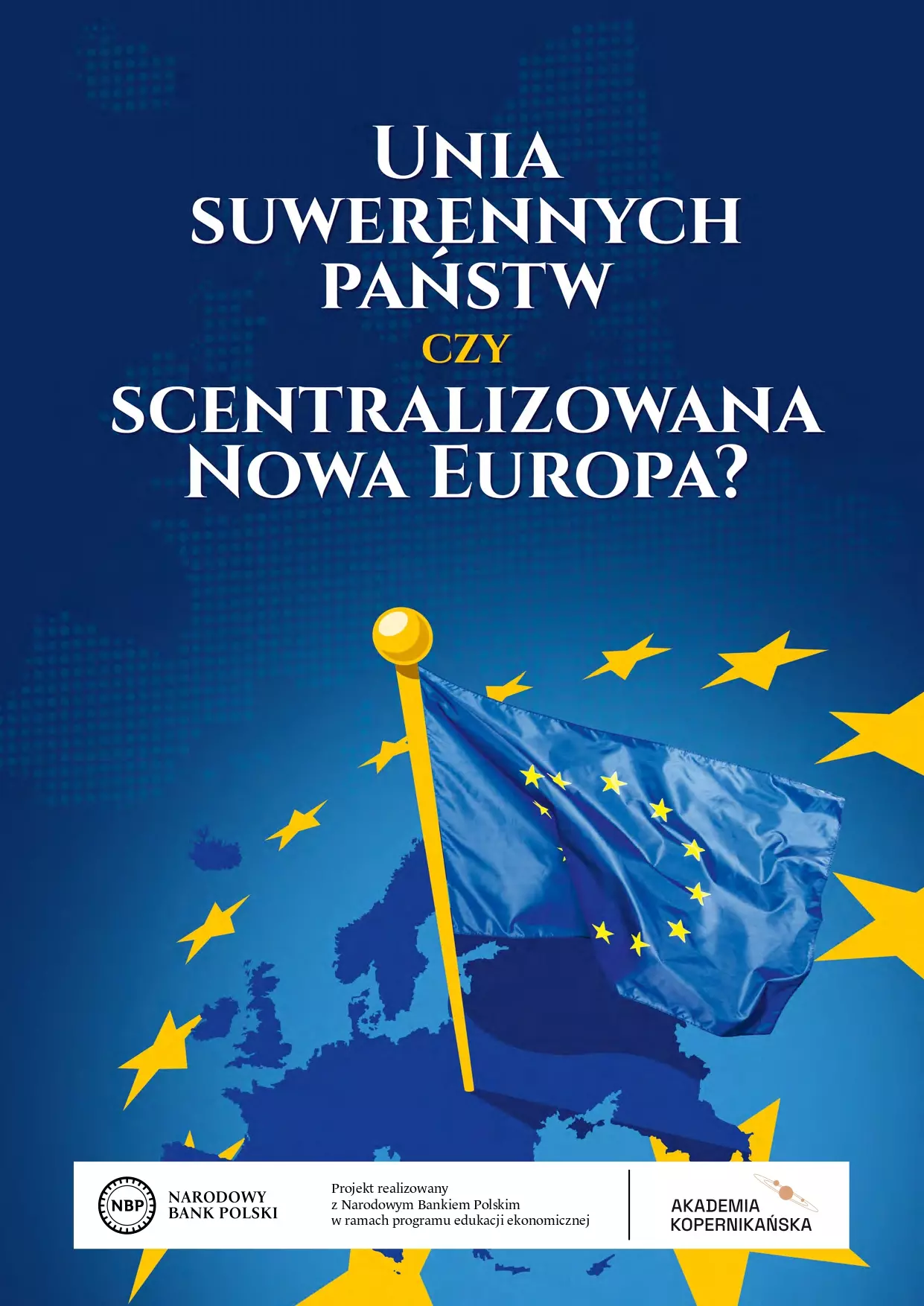
“A Union of Sovereign States or a Centralized New Europe?”
“Is the Federalization of the European Union a Threat to Poland and Europe?”
A clear point of reference for the international panel of scholars was the proposed changes to the EU treaties promoted by certain political groups in Europe—changes that would significantly impact the constitutional and operational framework of the European Union. The conference aimed to critically assess these proposals.
The event brought together scholars from six countries (Spain, Hungary, Italy, the United Kingdom, the United States, and Ukraine), who delivered 20 academic presentations. One of the conference’s key achievements was the in-depth academic reflection on numerous pressing and highly relevant issues that shape the EU’s current legal and institutional landscape.
- selected papers from the conference
- 3 award-winning essays from a graduate student competition (master’s level), focused on central banking.
- The conference and the competition were organized by the Nicolaus Copernicus Academy in collaboration with the National Bank of Poland.