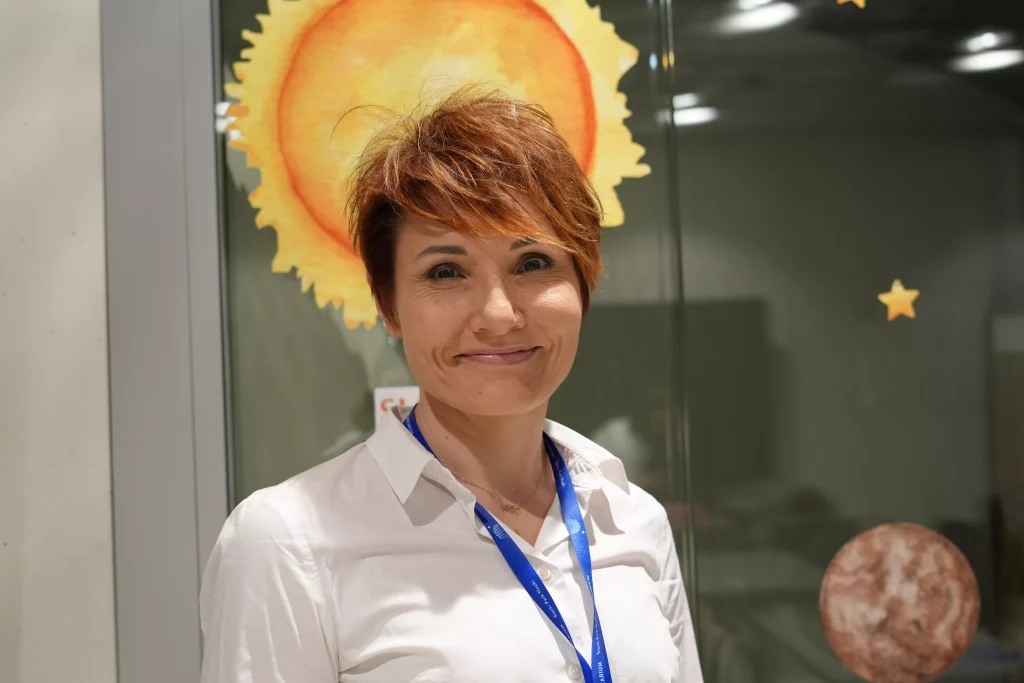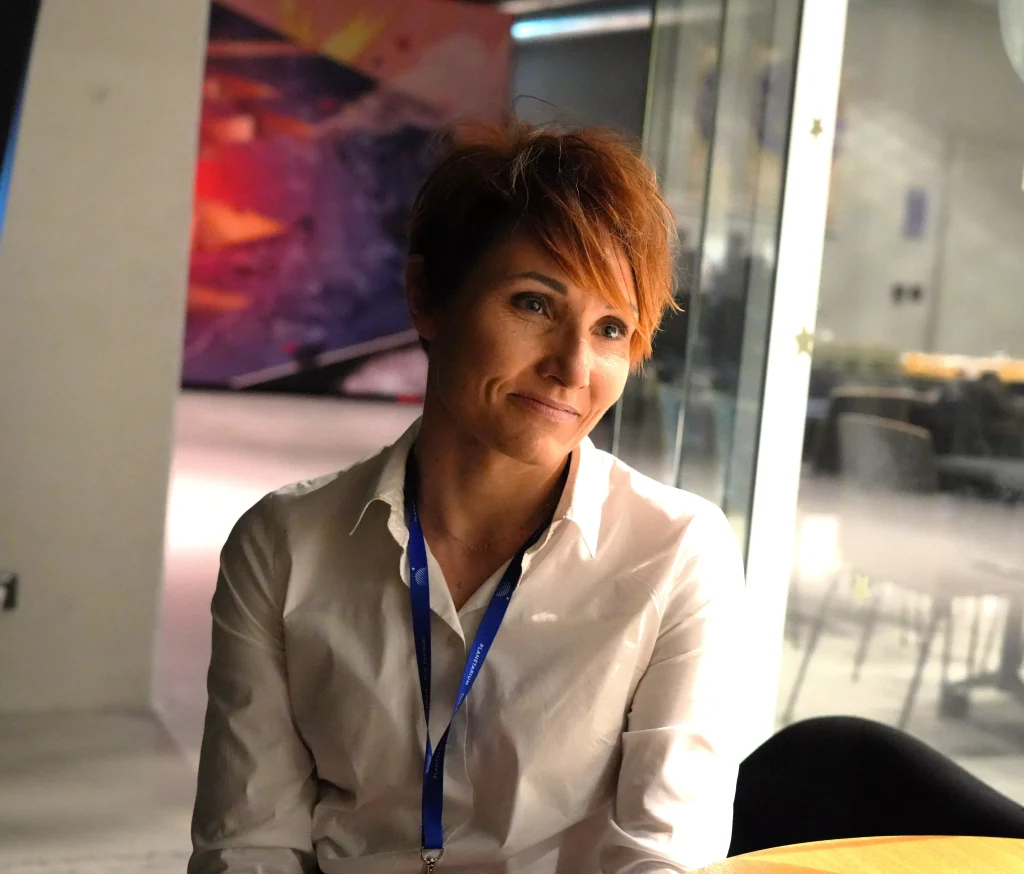
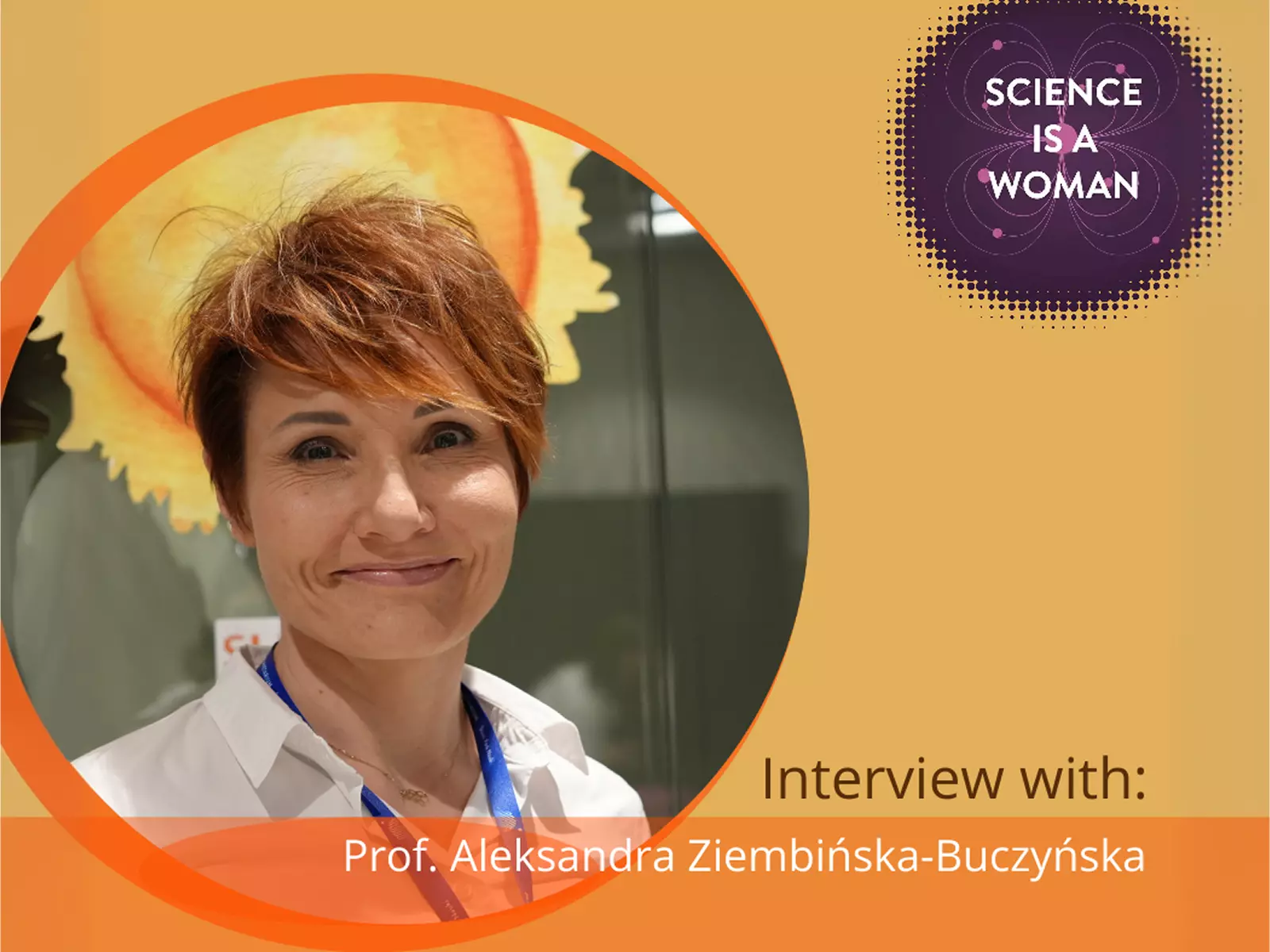
“I’m fascinated by the fact that these small, inconspicuous creatures have such an incredible power. I feel similarly about women in science – sometimes they keep to the shadows but they truly do incredible work”
– this is one of the insights
of Prof. Aleksandra Ziembińska-Buczyńska during our conversation about the role of women in science.
Throughout the interview we also discuss the Professor’s personal career history, and her fascination with a world which – though invisible – greatly impacts our lives; we also talk about her perspective on contemporary education, as well as the way in which science relies on cooperation, openness, and engagement.
Prof. dr hab. Aleksandra Ziembińska-Buczyńska
is a microbiologist, an academic lecturer, and a science popularizer working with the Silesian University of Technology. She specializes in environmental microorganisms as utilized in biotechnology and environmental engineering. For years, she has managed said university’s Science Popularization Centre, taking an active part in science communication. She is a Member of the Science Advocates Association (a.k.a. The Spokesmen of Science) and the Council for the Propagation of Science of the Polish Academy of Sciences, and a laureate of numerous award for her contributions to science and its popularization.
Q: I say “Copernicus”, you say…?
Prof. Aleksandra Ziembińska-Buczyńska
– Was a woman.
Q: Nicolaus Copernicus looked to the skies, whereas you investigate the mysteries of the microworld. What unites you, however, is the passion to discover the unknown. How did you come to be interested in this matter?
Prof. Aleksandra Ziembińska-Buczyńska
That is a very difficult question, since the path I took to my professional destination was quite winding. I will say more about it later today – about the story of my arrival at the University of Technology and involvement in microbiology.
With that said, at its foundation has been, I think, mainly the great, though hidden, potential of microorganisms. Without them, life on Earth – all that which surrounds us – would not exist. It fascinates me that these small, inconspicuous creatures have such an incredible power.
I feel similarly about women in science – sometimes they keep to the shadows, but they really do incredible work. . In my field – in biotechnology and microbiology – many of the researchers are women, but we work shoulder-to-shoulder with men. This is not a question of doing a better or worse job – what’s most important is the ability to effectively communicate with one another.
Q: And what is, in your opinion, key to success for a woman scientist?
Prof. Aleksandra Ziembińska-Buczyńska
That’s another difficult question. A lot, I think, depends on her personality, and where she ends up working, but also on luck; I, myself, have always been lucky with respect both to places and people.
I think that openness as a trait should characterize not just women but all people of science. Openness and desire to communicate with other disciplines and scientist is the reason why we are able to achieve a whole new level of quality.
Today, science is not created by individuals – we build large, interdisciplinary teams, especially in natural and technical sciences. Doing that is very important, since many topics require a multipoint perspective.
Q: You are both a scientist and a lecturer. How can we, in your opinion, interest young people in becoming truly passionate researchers – such as Nicolaus Copernicus and yourself – and not just students who simply pass from one stage of education to the next?
Prof. Aleksandra Ziembińska-Buczyńska
You’re asking some tough questions. What you mentioned is an issue we are trying very hard to address, especially in higher education. We’re seeing an immense need to encourage young people to do science – not necessarily in order to have them follow in the footsteps of Copernicus or Skłodowska-Curie, but so that they want to develop themselves and put some of their energy into intellectual growth.
We’re living in times which, on one hand, are incredible, as we can study anywhere, but which, on the other, due of this excess of possibilities, can just as well be difficult. We are not, after all, capable of knowing and learning everything – we need to focus on something.
As an academic teacher, I concentrate, above all, on dialogue.
After years of didactic work, I recognize that of most importance is the simple question directed at young people: what do they actually want? Why are they here and what do they expect of us? This works both ways: they also want to know what we do and what our expectations of them are.
This, I think, is precisely the way to make science interesting not just to youth, but to people of all ages. Afterall, we can see this in classes of the University of the Third Age, or as part of civic science. There exist many activities which can open our minds, but dialogue and communication is the foundation.
And what’s most important is showing that – to speak plainly – we’re “fired up” by the topic we work on. That is incredibly appealing.
The more I show that I put my heart into microbiology, the bigger the chance that the people I talk with will want to see whether it really is that exciting, and whether it’s worth pursuing.
Q: We always try to reference Copernicus, being representatives of the Nicolaus Copernicus Academy. He is famous for his work in astronomy, which was his great passion. And what, other than microbiology, is your passion?
Prof. Aleksandra Ziembińska-Buczyńska
I love my garden. It’s a place where I can experiment just as I would in a laboratory, because planning a garden is a process of constant change. When spring arrives, I wonder where things should be planted, why one plant has died while another is thriving – it’s all a matter of trial and error. I also love animals. I have two dachshunds who are the apple of my eye. Spending time in nature, with a good book, surrounded by animals and my loved ones, is my greatest passion. These days, it’s a rare commodity, as we rarely have time for it.
Q: And from your perspective, what does collaboration between women and men look like in the world of science? How does it function in everyday work?
Prof. Aleksandra Ziembińska-Buczyńska
I think we shouldn’t constantly emphasise that we’re different because we’re women. In the broader context, it doesn’t really matter. What’s more important is the substance of the work, an open mind, and a willingness to cooperate in the first place.
To be honest, I rarely decide to collaborate based on whether someone is a woman or a man. I look at competence and knowledge. That’s how I was taught from the very beginning, from my university days, even though I studied biology, which is a highly female-dominated field. On the other hand, the University of Technology is often seen as a masculine domain, which isn’t entirely true either.
I believe we shouldn’t make such a distinction between genders in science, but rather consider which researchers who are open to collaboration and simply do a good job.
There are those who do a brilliant job, and those who aren’t quite as effective – that’s all there is to it.
Professor, we thank you for your time and wish you continued academic success.