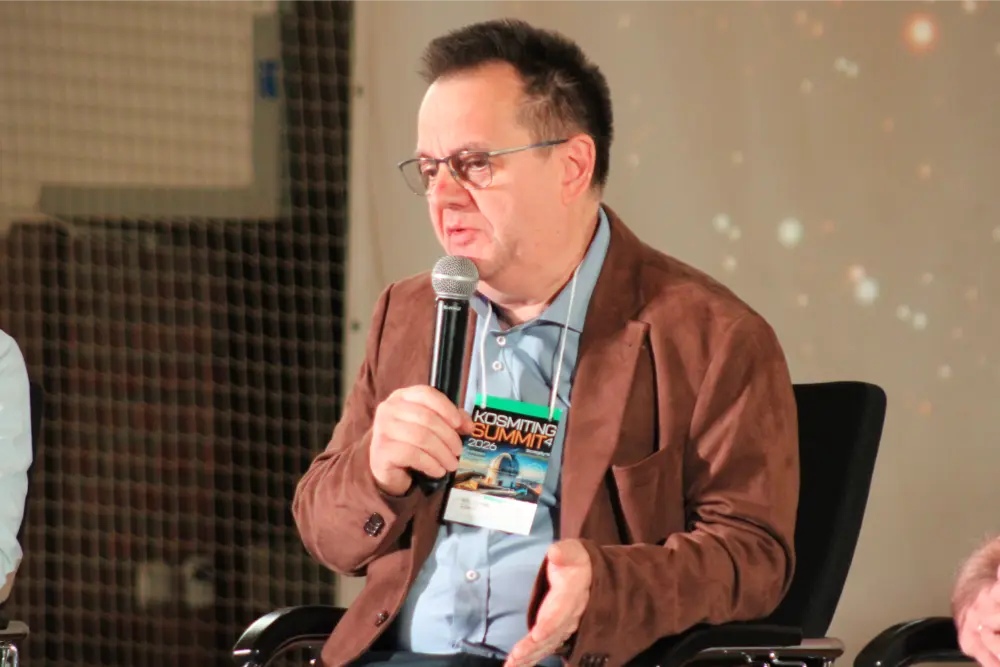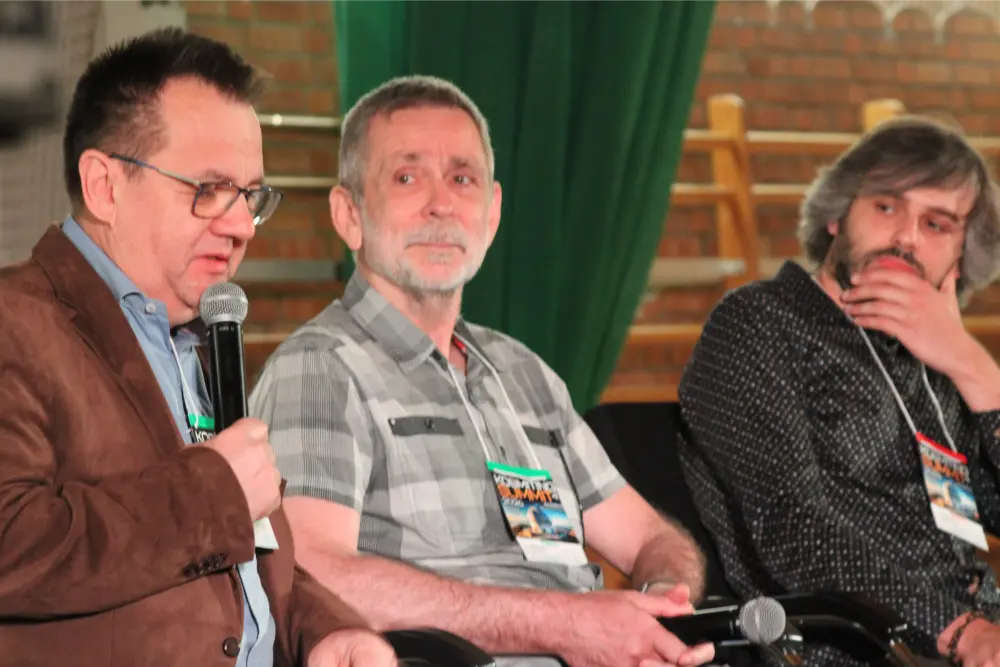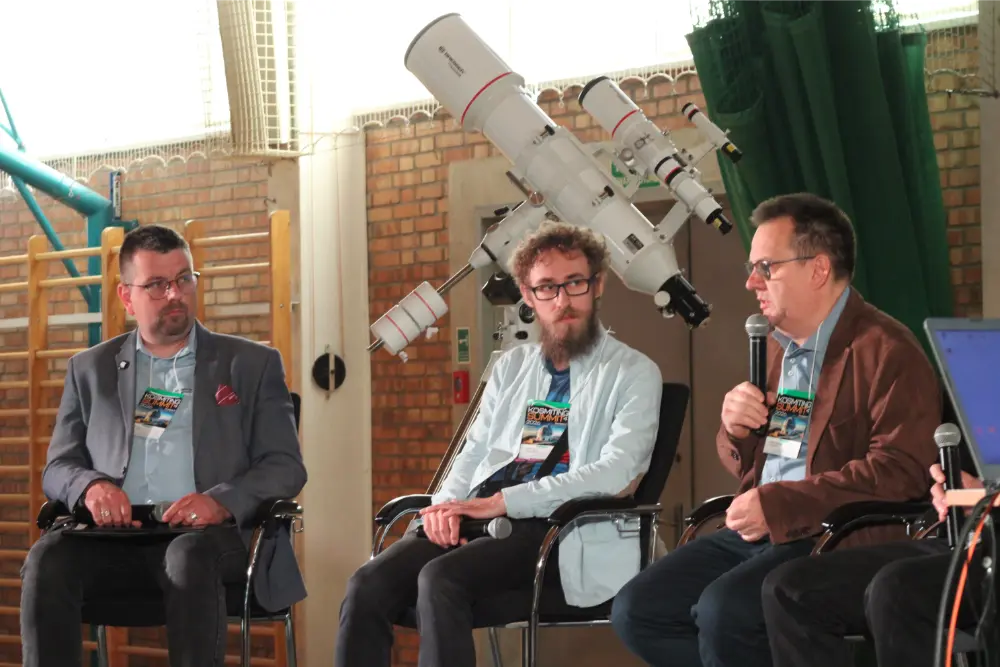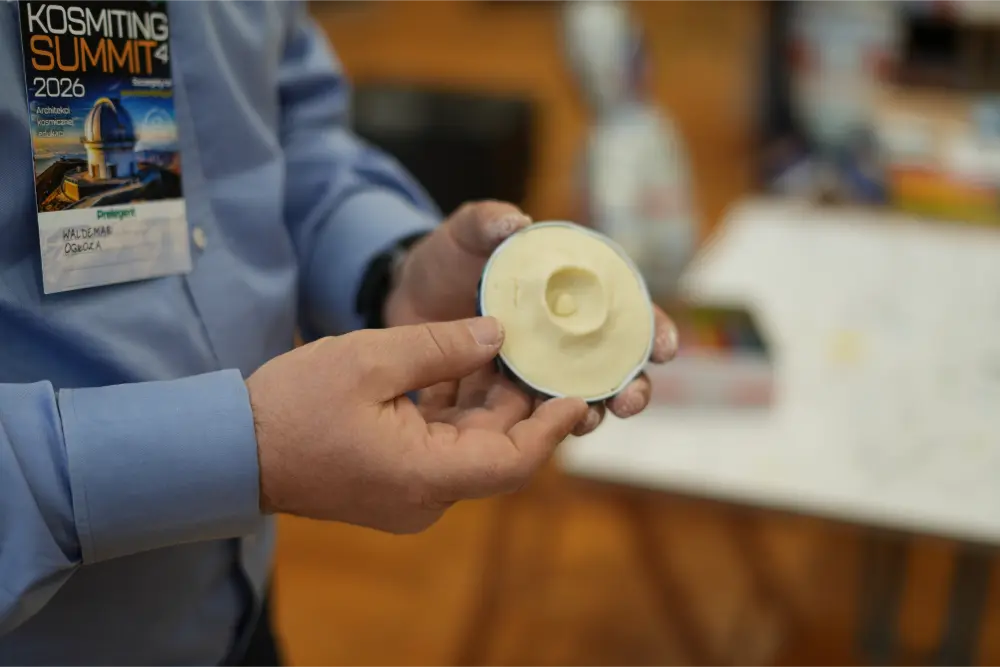
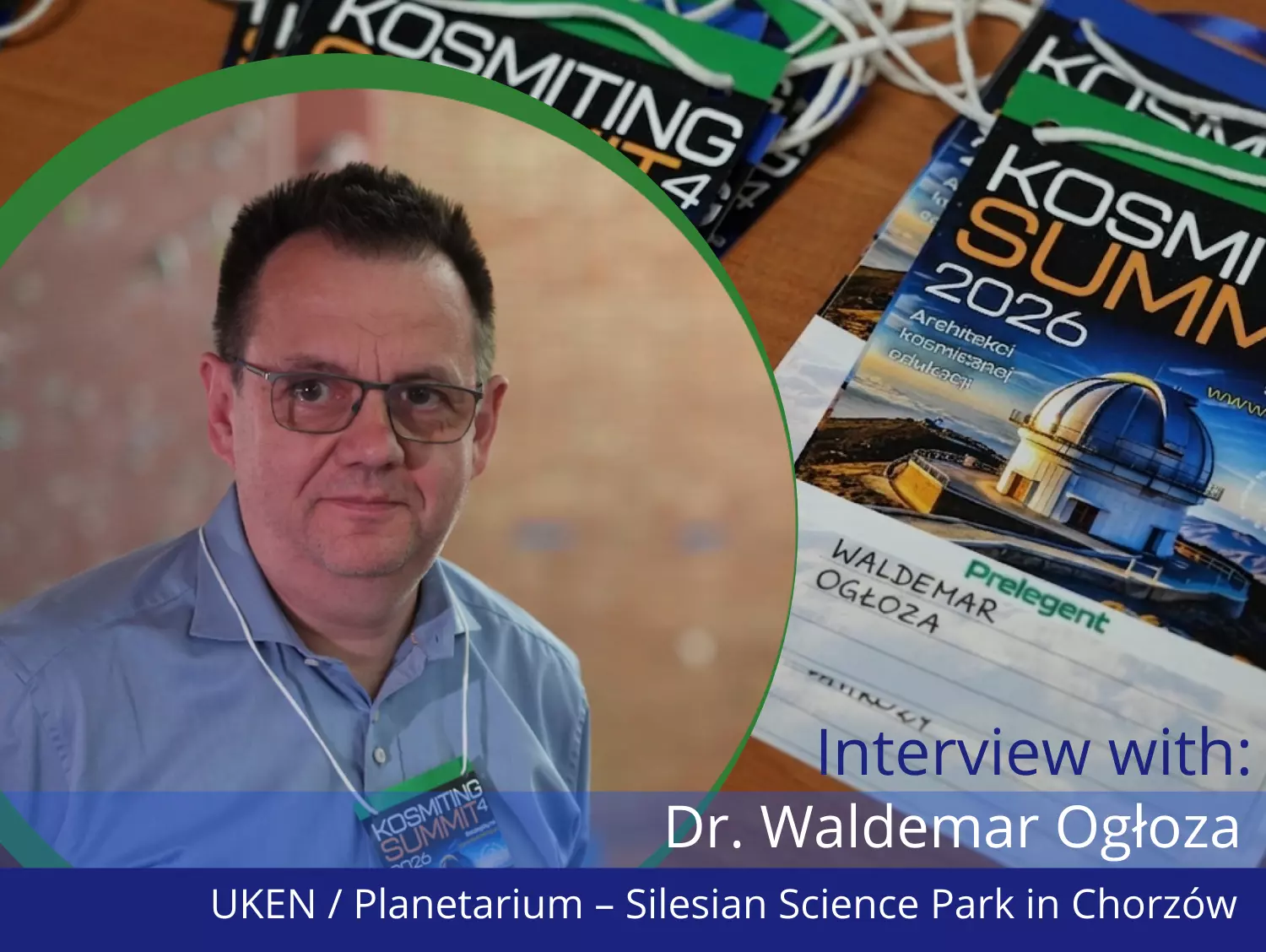
During the Kosmiting Summit Conference in Andrychów we talked with
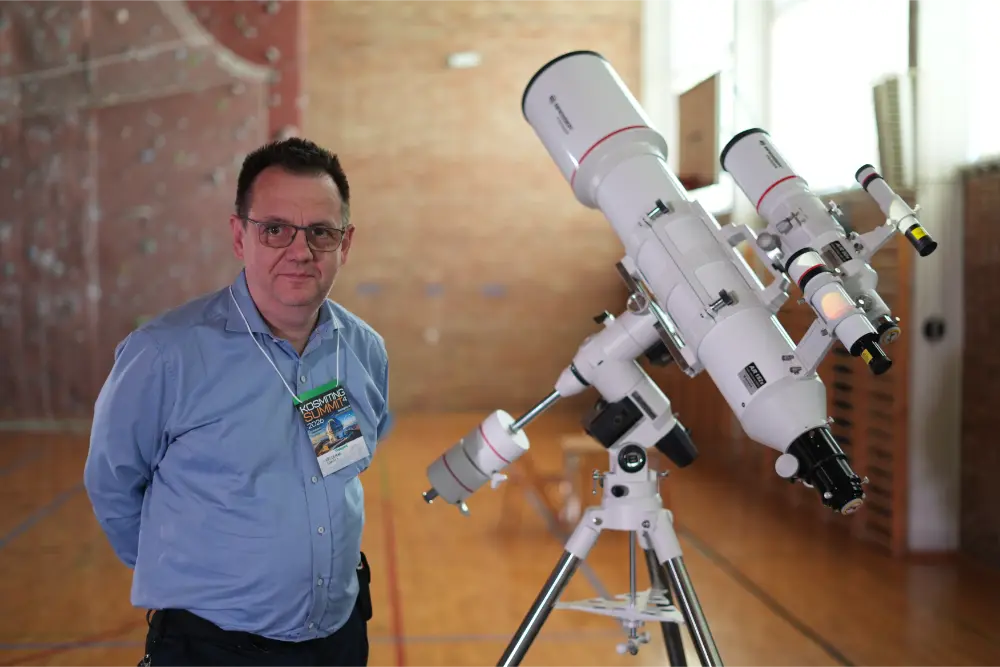
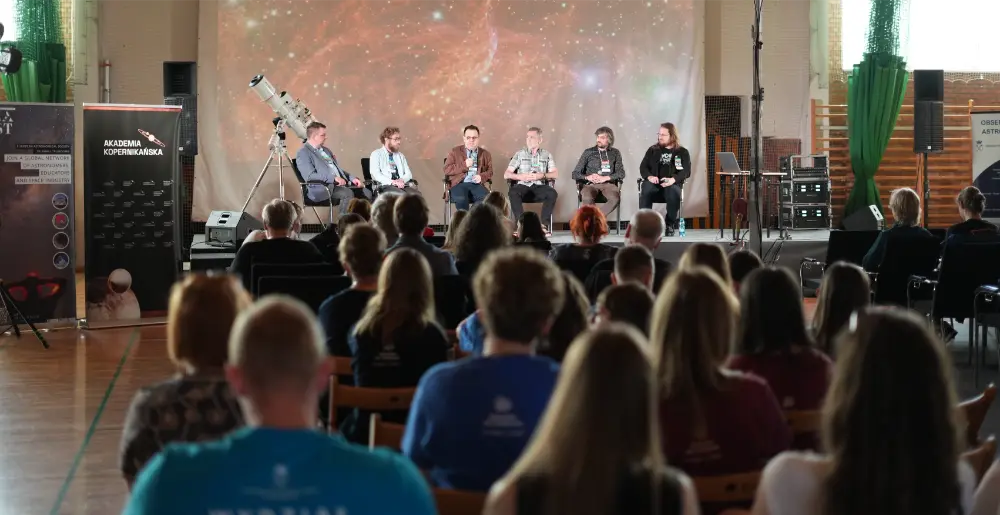
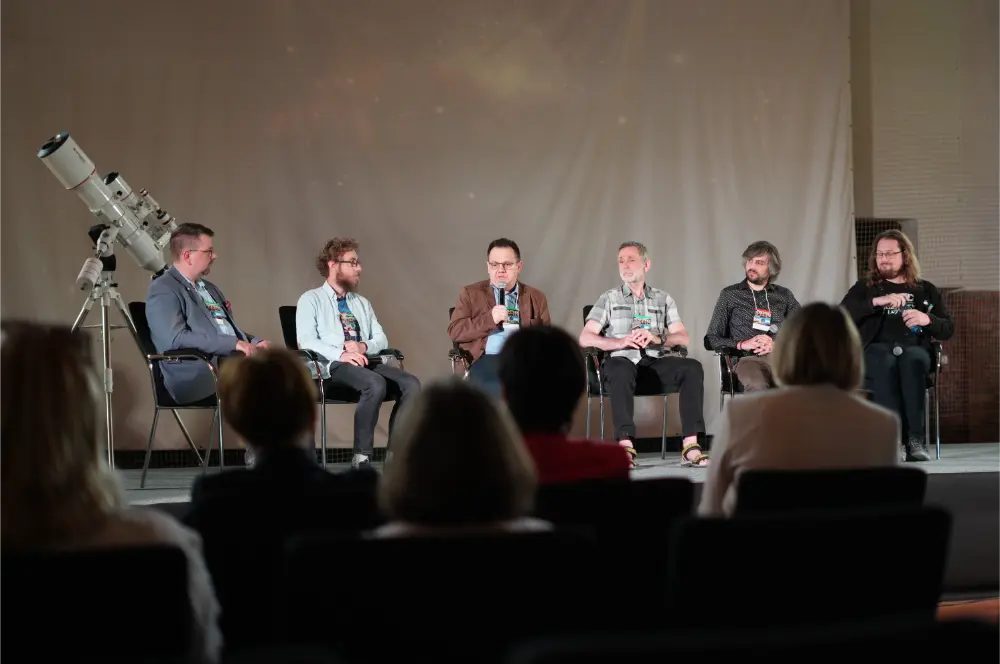
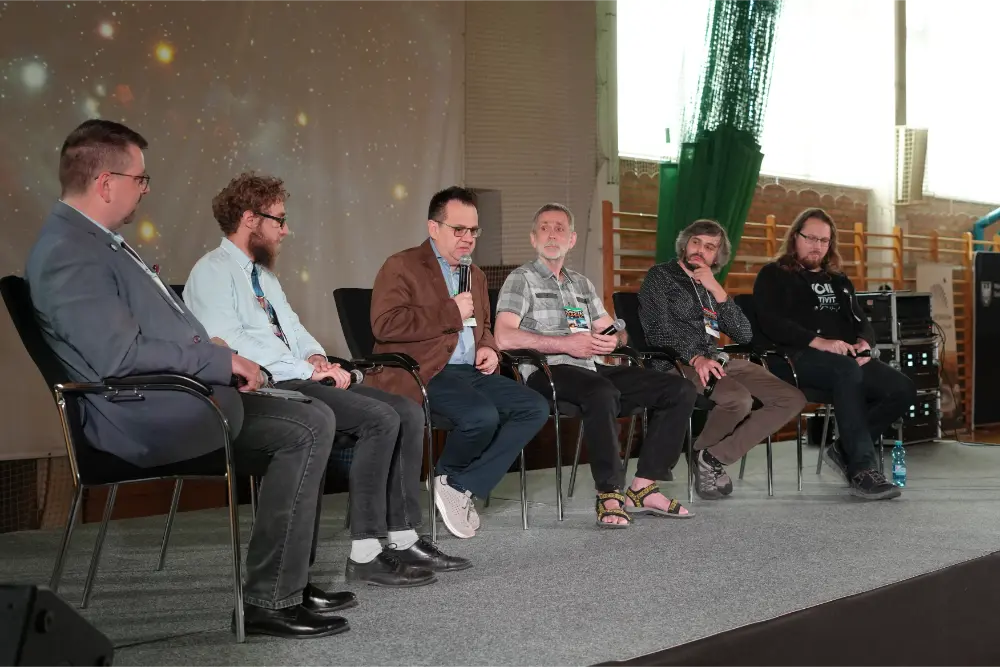
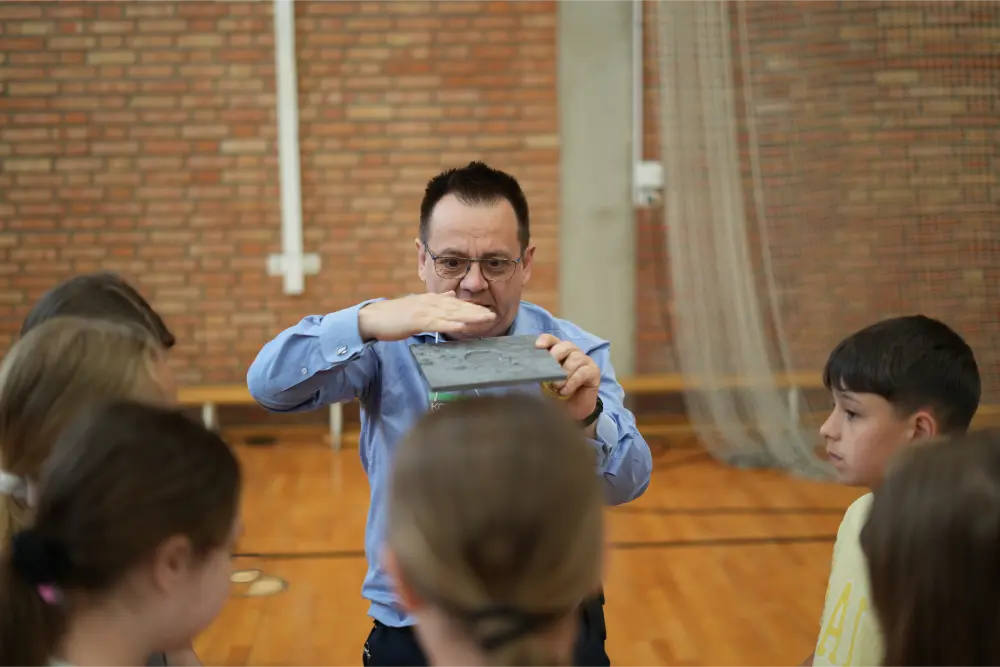
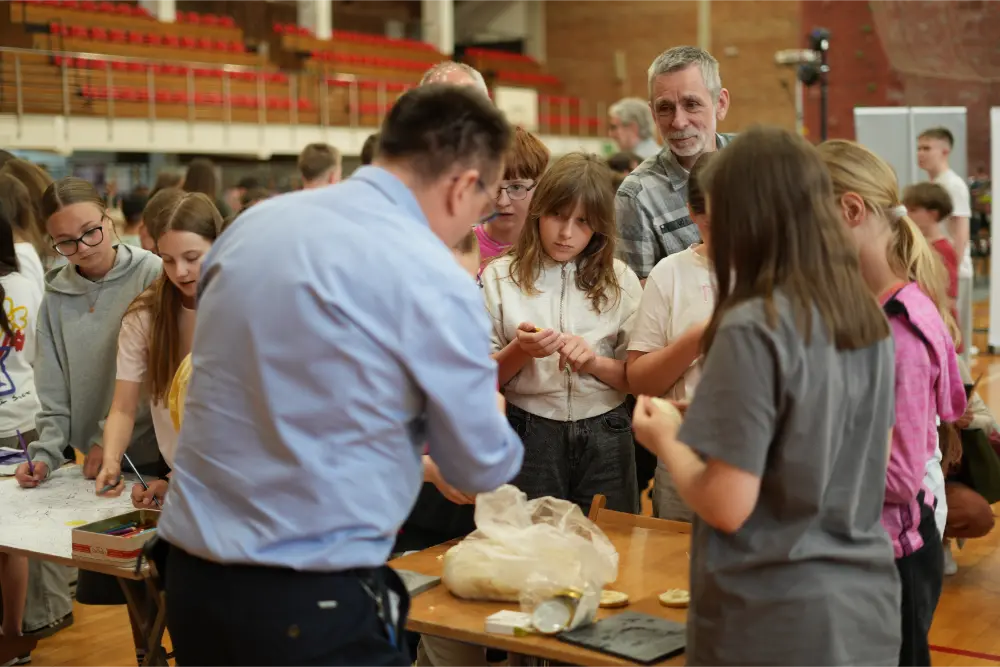
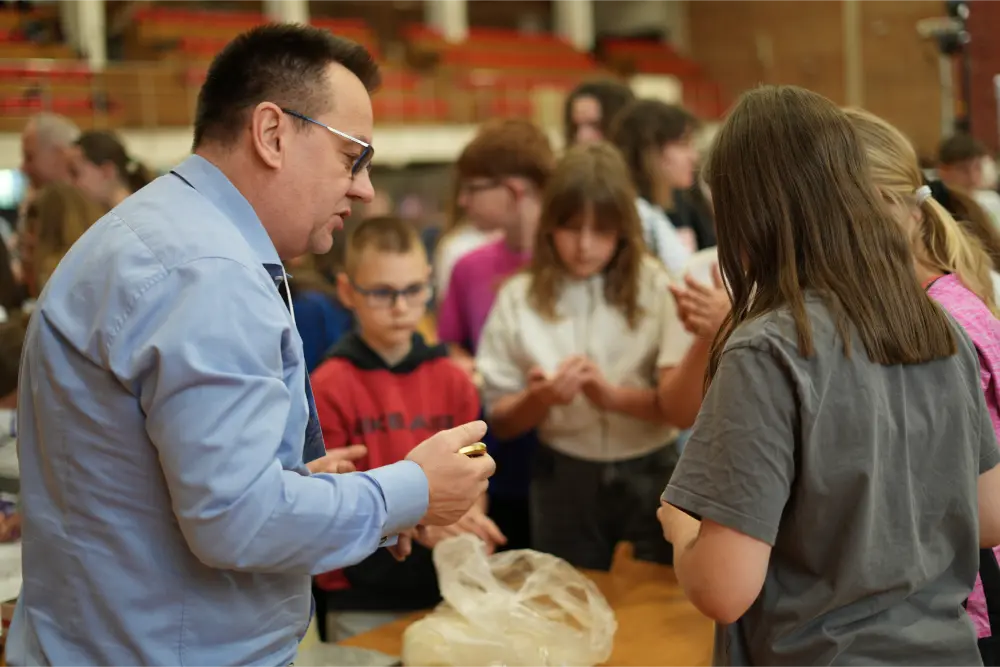
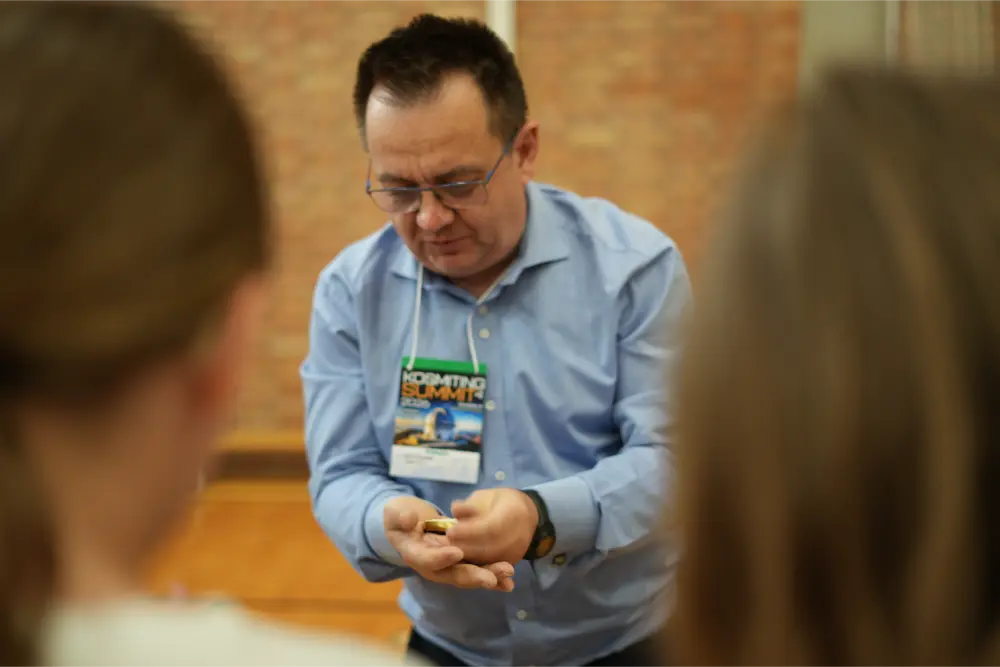
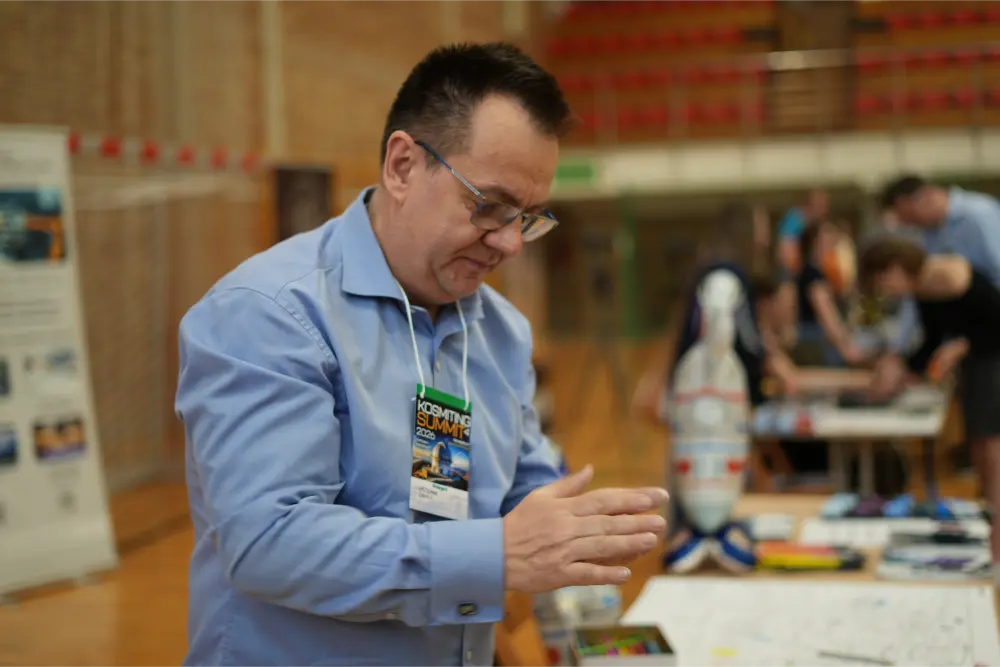
Dr.Waldemar Ogłoza about astronomy popularization, education, and the place of that discipline in Polish schooling. Our interlocutor took an active part in the event, including as a speaker on the panel which opened the conference – together with acclaimed representatives of the astronomical community, such as the Director of the Astronomical Observatory of the Jagiellonian University. Dr. Ogłoza also cohosted science demostrations directed at the participants and youth.
We invite you to read through our interview.
Dr Waldemar Ogłoza is an astronomer, lecturer at the Institute of Physics of the University of the National Education Commission, Kraków (UKEN), and a staff member of the Silesian Planetarium. His research focuses on the observational study of variable stars, and he is actively involved in the popularization of astronomy. For many years, he has worked with gifted young people as Chair of the Astronomical Olympiad Committee and as the mentor of the Polish teams competing in the International Olympiad on Astronomy and Astrophysics (IOAA).
Q: Astronomy is set to return to schools as a separate elective course. What prompted this change, and what are its main objectives?
Dr. Waldemar Ogłoza
In the past, of course, astronomy existed as a separate subject and was compulsory for all pupils. Later, times changed – I believe it was during Minister Robert Głębocki’s reforms that the idea emerged that astronomy is present everywhere and be interdisciplinary, as it can be discussed in geography and physics, but also in various cultural contexts. However, a certain degree of coherence was lost in the process. The astronomy content that has appeared in physics classes to date has been limited and not necessarily the most important, at least from an astronomer’s perspective. An awareness of where we are, where the Earth is situated in the universe and what processes govern it, is important for every well-educated person. That is why astronomy will certainly remain part of the physics curriculum, and a compulsory module will definitely be retained. However, to emphasise the inspiring role of astronomy – which we can see even today at this meeting, where young people are interested in space because it is so accessible at a descriptive level – it is worth making the most of this. Before we delve into complex equations, we are fascinated by the cosmos simply because it is colourful and accessible: in the countryside through the dark sky, and in the city thanks to the proximity of a planetarium, for example. To reconcile these two aspects, the idea arose that, given the right conditions – a well-prepared teacher or suitable facilities – astronomy could be offered as an optional subject.
Q: From what age – or, rather, from which year group – will pupils begin to study astronomy?
Dr. Waldemar Ogłoza
The plan is for astronomy to be taught at the third stage of education. Of course, we don’t know everything yet, as we still have a long way to go to prepare and develop the curriculum properly. Astronomy is intended to be something that motivates students to learn, especially when it comes to science subjects.
Q: While talking to one of the people involved in popularising astronomy, we heard something interesting: children in grades 7 and 8 apparently lose their enthusiasm; to prevent this, you need to spark their interest earlier, because it becomes very difficult later on.
Dr. Waldemar Ogłoza
Yes, there is something to that…
Q: So how might this work in practice? Rather than gaining enthusiasm, could children end up losing it?
Dr. Waldemar Ogłoza
That’s a good question. I hope the subject will be chosen in schools where there is a passionate teacher – their role is crucial here.
JHowever, if a school decides that it lacks the appropriate facilities or a person who is passionate about the subject – perhaps because the teacher prefers other areas of physics or the school has a different focus – it should have the option to make that choice.
An interest in astronomy develops at an early age. This is evident at science festivals, where even adults turn up on the pretext of showing children the cosmos. This spark usually appears towards the end of primary school. Unfortunately, very often these interests are later stifled by parents. In Poland, astronomy – or science in general – is sometimes viewed as a sort of show in which a mad scientist conducts explosive experiments, rather than as something that enables people to provide for their families and earn a living in the future. It must be emphasised that scientists pursue science not for its own sake but for the good of society.
I hope that presenting astronomy in a way that goes deeper than the prism of trivia will have an impact. The Science Park is great – it’s full of interesting facts – but school is also a place for solid, systematic work. It was established to teach a systematic approach, but also to demonstrate that science – in its various fields – is a fully-fledged career path and a route to professional development.
Q: Coming back to the curriculum itself – who is involved in developing it?
Dr. Waldemar Ogłoza
I won’t name any names, because I’m afraid of leaving someone out; the full list is available on the website of the Educational Research Institute. That said, the team that has been appointed is, in my view, very diverse – and that’s a very good thing. It includes representatives from academia and astronomical centres, popularisers of astronomy, as well as practising teachers, which is extremely important.
In this group, there are no teachers who are reluctant to teach astronomy – in my view, this is a slight drawback, as we’re assuming that all teachers will put their heart and soul into this subject. It’s clear, however, that in the real school environment this won’t be the case, so we must bear in mind that the curriculum won’t always reach a teacher who is two hundred per cent committed and passionate.
The panel of experts was selected to bring together the academic world, those responsible for developing curricula and textbooks, as well as professionals who have recently stepped away from the blackboard and are thoroughly familiar with the realities of schooling and the practical possibilities for delivering lessons. That’s what it looks like.
Q: Can events such as Kosmiting 2026, organised in Andrychów, contribute to the development of astronomy education?
Dr. Waldemar Ogłoza
Kosmiting is the result of the hard work and enthusiasm of a few dedicated individuals in that particular place. How can we find a few such people for every town? We have astro-bases where other initiatives are taking place, and we have observatories and planetariums built by schools. Astronomy as a subject will probably help to standardise and organise these diverse activities. We have enthusiasts who search for meteorites and show them to students; others are passionate about astrophotography, and still others about observing stars, demonstrating that even with small telescopes it is possible to conduct genuine scientific research and to secure publications (e.g. through the BHTOM programme). Each of them specialises in one of these fields. The aim is for astronomy in schools to, on the one hand, demonstrate that these other areas exist, and on the other, be flexible enough to organise knowledge while remaining open to the specific characteristics of a given region. Astronomy as a school subject should simply systematise certain things
Q: You mention practical exercises and tasks. Education in Poland and around the world is moving towards project-based learning – when creating a project, pupils look for the theory, and teachers then explain it to them. I remember studying astronomy at secondary school, and the programme you’ve outlined is to be based precisely on practical work.
Dr. Waldemar Ogłoza
I don’t know if it will be based entirely on that, but it certainly should include such elements. I don’t want to get too far ahead of myself, as we are only just starting to work on this.
It is clear, however, that astronomy provides an excellent opportunity for hands-on activities: making one’s own observations, learning during a visit to a planetarium or observatory, or even during a sightseeing trip, where, using a simple stick, one can determine the Sun’s altitude above the horizon. The practical element is extremely valuable, as it provides direct experience.
Using the internet can also be a form of experience. Young people use it every day, but here it can involve familiarising themselves with the results from the world’s largest telescopes or remotely controlled ones. We have a wealth of open-access resources for engaging in so-called citizen science – for example, the Galaxy Zoo programme, in which, after a brief training session, participants classify the structure of galaxies.
Q: What are your hopes for this programme?
Dr. Waldemar Ogłoza
That it will be a success and that we’ll find teachers who will teach this subject with passion. Teachers are the key factor here.
Q: How many students do you think it will attract, and how interested will the children be?
Dr. Waldemar Ogłoza
That’s a good question; as things stand, we don’t know. I could, however, mention the “Astronomer at School” programme, which was once run by the Polish Astronomical Society. Although it coincided with the pandemic, several thousand schools that wanted to host an astronomer signed up for it. It was clear that schools recognise the need to teach such content to students.
I think, therefore, that there will be considerable interest. Of course, there is competition – a principal may decide that another subject would be better for their pupils.
.
Q: You are developing a programme and will need a large number of teachers. How do you plan to motivate and further train them?
Dr. Waldemar Ogłoza:
The national curriculum is just the beginning. I know that some universities are already planning postgraduate programmes and qualification courses for teachers wishing to specialise in this subject. We have a long way to go before this subject becomes established and takes root.
If I could make one more wish, I would like what is created to be judged only once the project is well and truly underway, rather than while it is still being implemented. Certain processes take time in order to gather experience and become properly organised.
AK: Finally, I’d like to add one thing: wherever we go and talk with people from various centres and planetaria, we hear about how the Silesian Planetarium in Chorzów supports smaller centres throughout Poland. Everywhere we go, we hear about Chorzów: Chorzów helps, Chorzów has lent equipment, Chorzów supports us, and together with Chorzów we’re developing…
Dr. Waldemar Ogłoza
I’m very happy that Chorzów is viewed in this way. We’re doing our very best. That’s what tradition calls for. We’ve already celebrated the planetarium’s 70th anniversary, and our staff are still full of enthusiasm. The people who work there are passionate and put far more heart and effort into this place than their job description requires.
AK: In that case, we wish you success.
Dr. Waldemar Ogłoza
Thank you very much.
We thank Dr. Waldemar Ogłoza for the interesting conversation and for his
time. We exdent wishes of perseverance and success in implementing the new
curriculum, as well as in the continuing development of his scientific career.