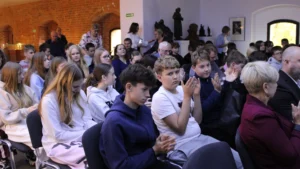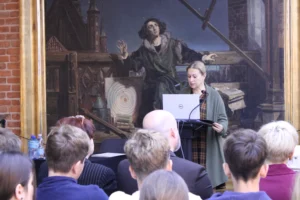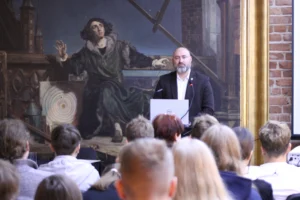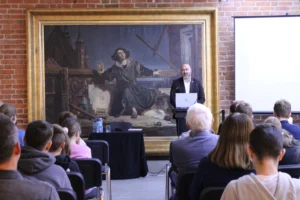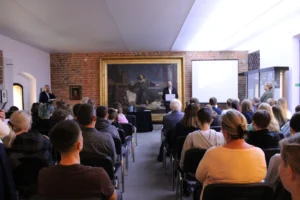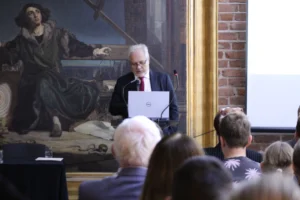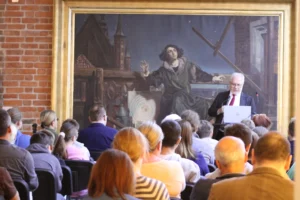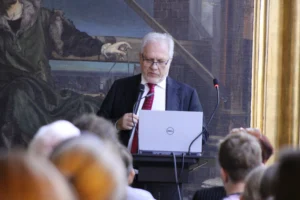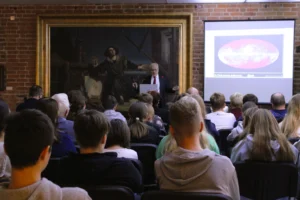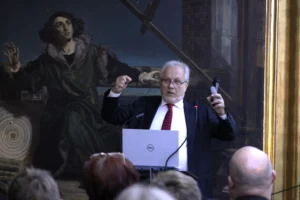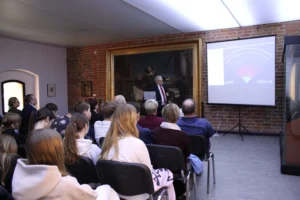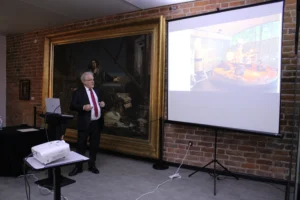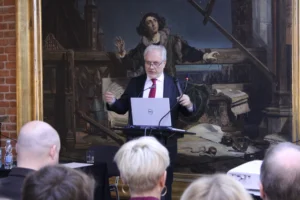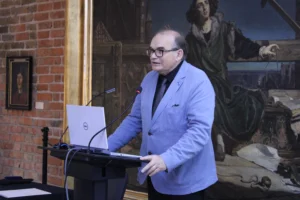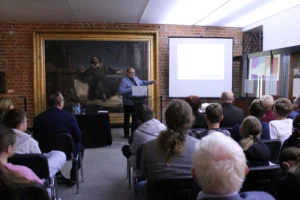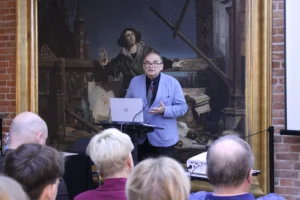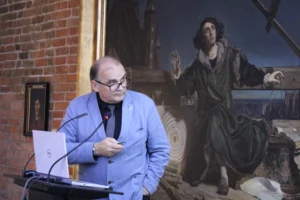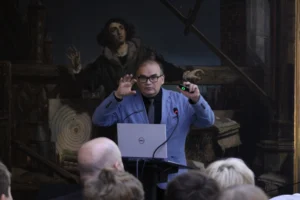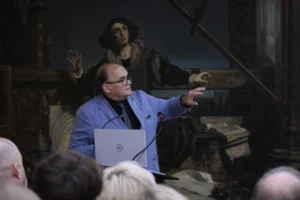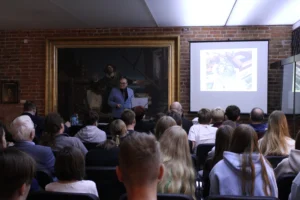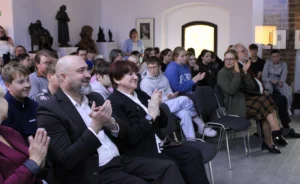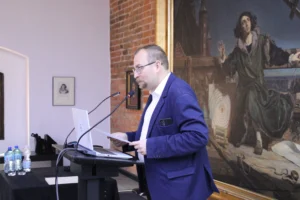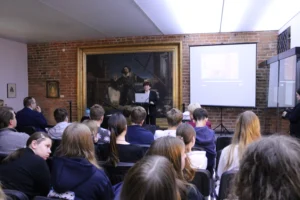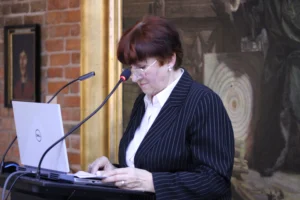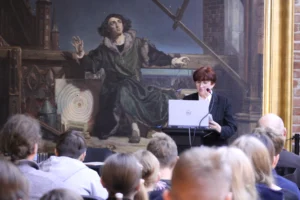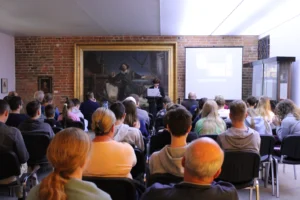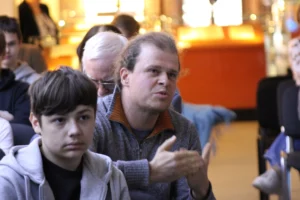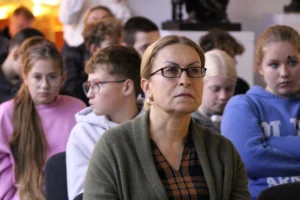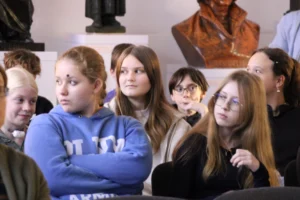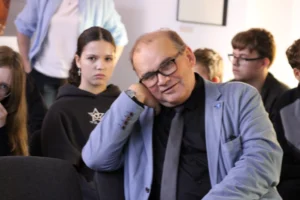
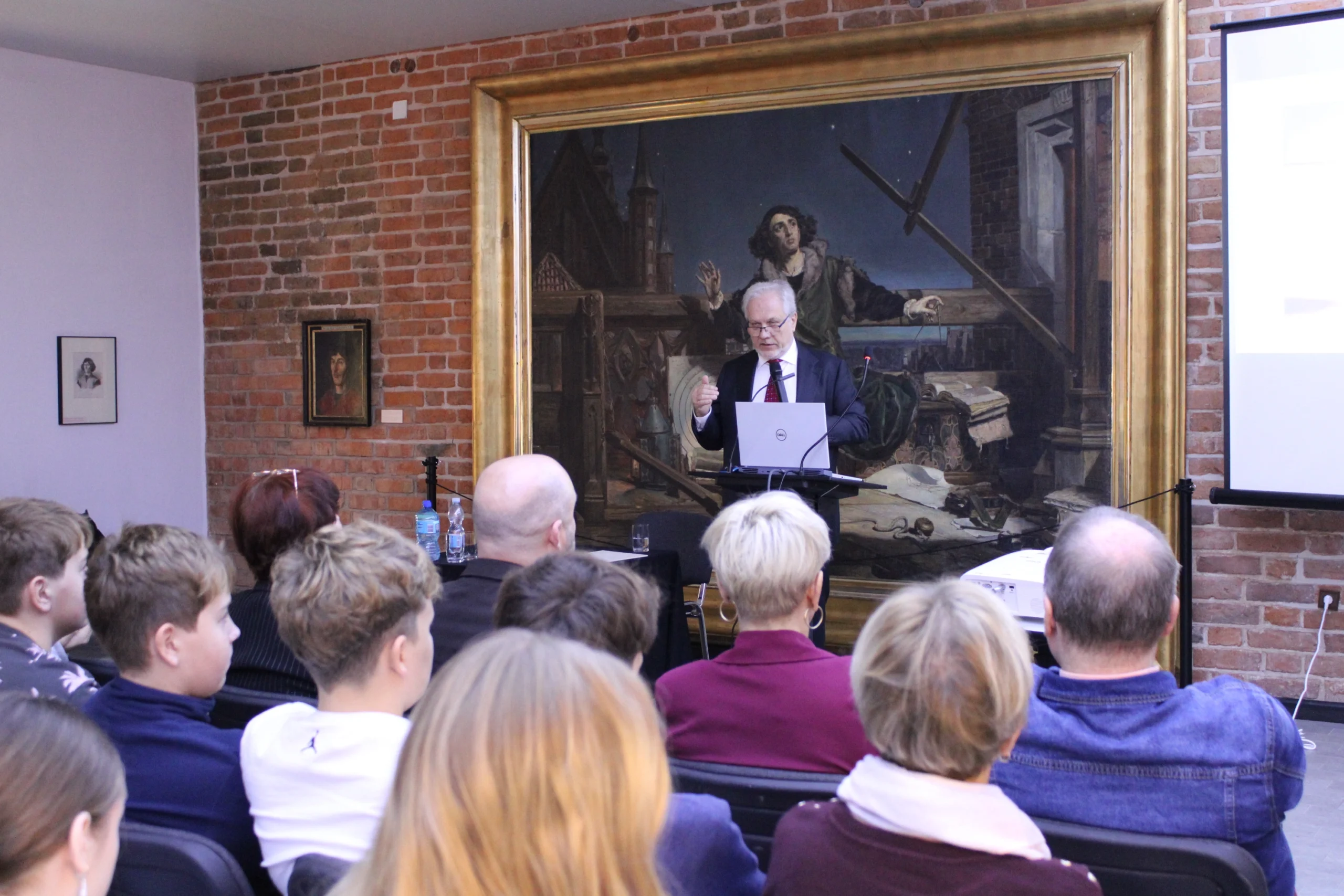
On October 16, Ms. Anna Zienkiewicz, Director of the Nicolaus Copernicus Museum in Frombork, opened the meeting. The lecture session featured two astronomy professors from the Copernican Academy and a museum representative. The talks, aimed at a general audience, focused on Copernicus not only in the context of contemporary astronomy but also on the museum’s research into his grave and reburial. Dr. Michał Górny moderated the session.
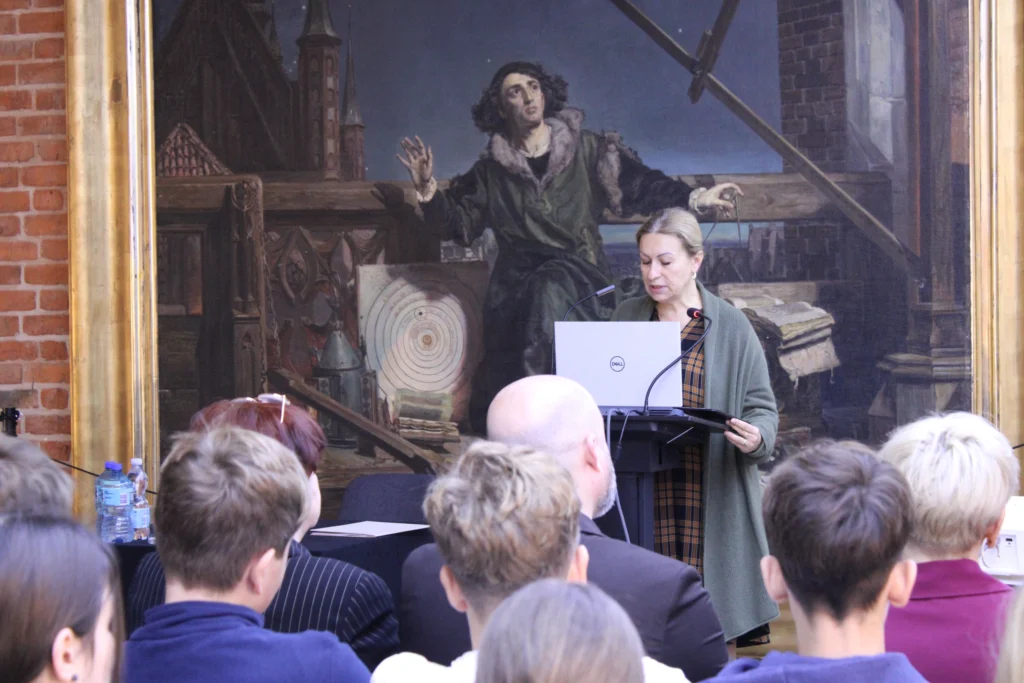
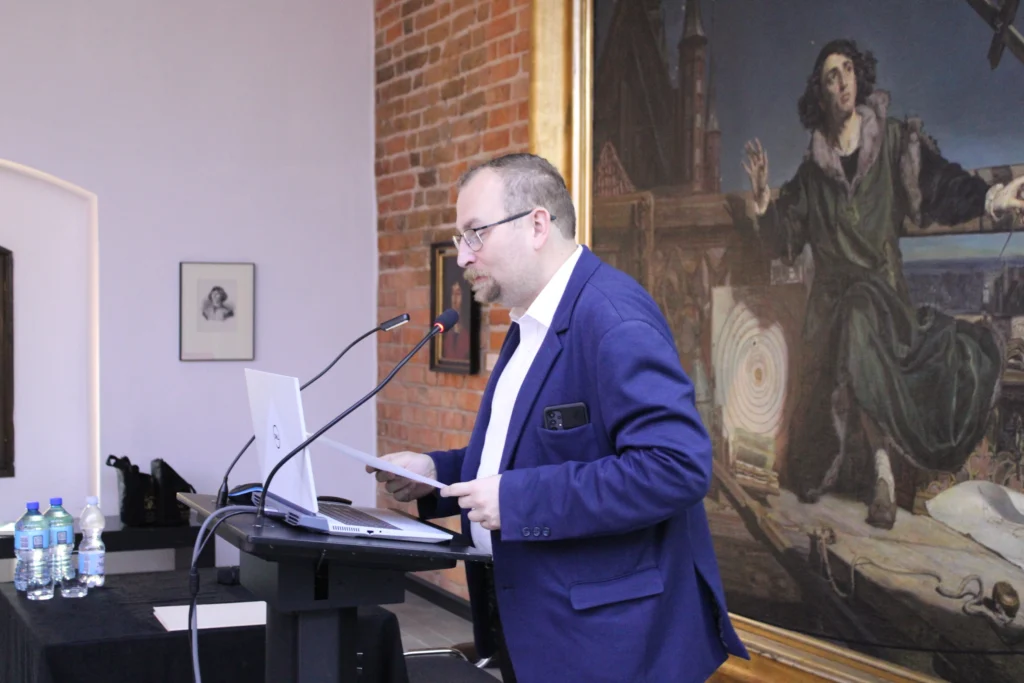
The Mayor of Frombork, Mr. Damian Krasiński, gave the opening remarks, emphasizing the enduring significance of Copernicus’s legacy for modern science:
“Nicolaus Copernicus still lives in our consciousness—not just as a historical figure, but as an inspiration to explore, collaborate, and develop our own talents. We don’t stop at written sources or Wikipedia—we strive to expand our abilities and uncover Copernicus’s hidden talents.”
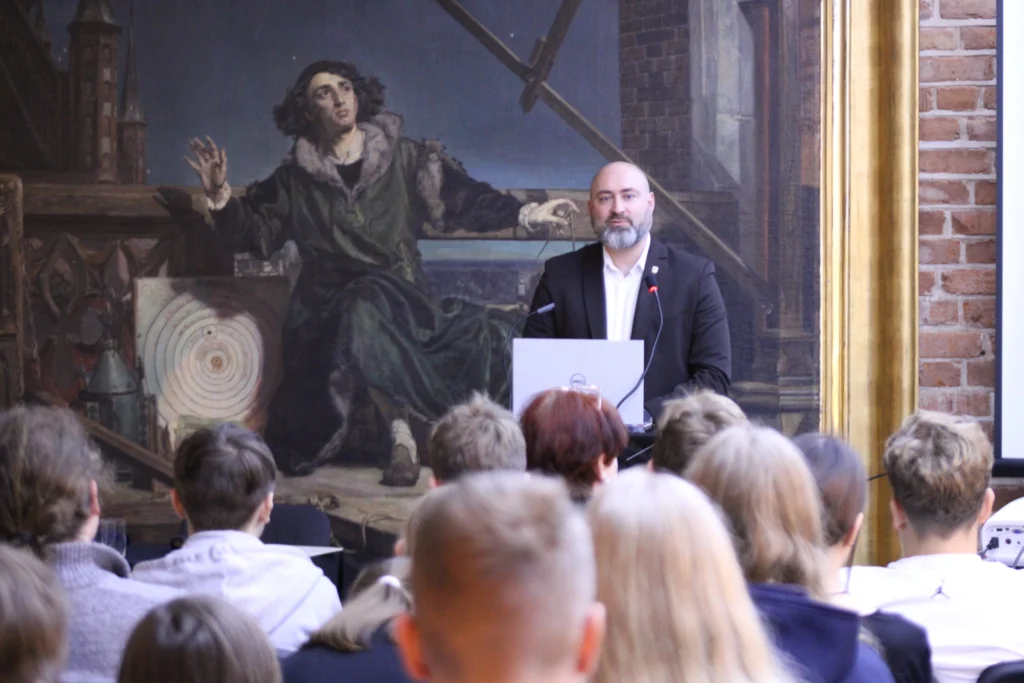
1. Professor Krzysztof M. Górski: “Copernicus’ Universe and the Universe Today”
Professor Górski began by tracing how humanity’s understanding of the universe has evolved—from Copernicus’s time to contemporary NASA and ESA missions, in which he has participated over his 40-year career. He opened with the Copernican revolution, which “stopped the Sun and set the Earth in motion.” He then discussed 20th-century breakthroughs, including the expanding universe, the Big Bang origin, and the precise estimate of the universe’s age at about 14 billion years.
He explained research on cosmic background radiation that allows scientists to glimpse the universe’s earliest moments and described satellite missions such as COBE, WMAP, and Planck, which enabled detailed all-sky maps. He noted that while the modern model of the universe seems mathematically elegant, 95% of its content consists of dark matter and dark energy—phenomena we still do not fully understand.
Professor Górski concluded by encouraging young listeners to remain curious, ask questions, and seek answers, just as Copernicus did:
“We need a new Copernicus—someone willing to see the world differently.”
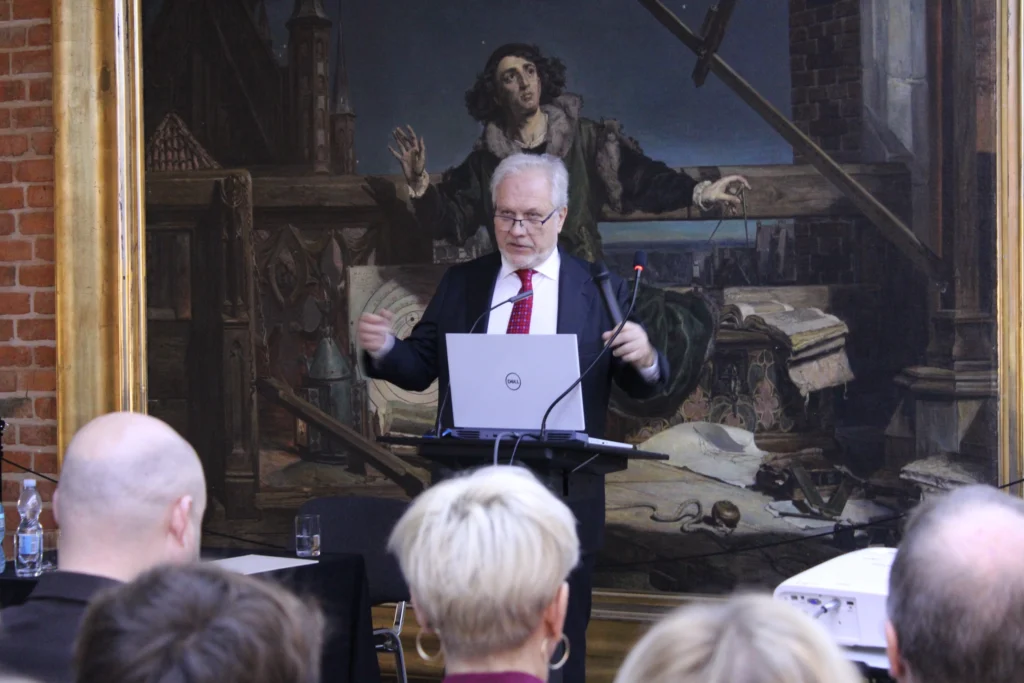
2. Professor Marek Sarna: “From Copernicus to ESO: How Polish Astronomers Observe the Universe Today”
Professor Sarna began with a puzzle based on Jan Matejko’s painting “Copernicus: Prayer to God”, asking participants to identify an instrument Copernicus could not have used. He then described how modern Polish astronomers conduct research at the European Southern Observatory (ESO), using advanced telescopes, radio telescopes, and satellites. He explained that the best observation sites are dry, high-altitude regions, such as the deserts of the Andes in Chile.
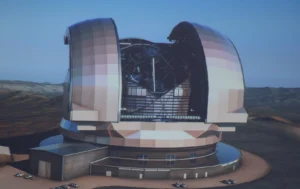
Thanks to cutting-edge technology, astronomers can now observe protoplanetary disks, exoplanets orbiting other stars, and confirm the presence of a black hole at the center of our galaxy. Professor Sarna also presented a nearly 40-meter telescope project that promises even more precise future observations.
Returning to his puzzle, the correct answer was a telescope, which Copernicus did not possess—he relied solely on the naked eye and simple observational tools. Two young attendees answered correctly and received small prizes. The lecture highlighted that astronomy involves not just gazing at the stars but also developing modern techniques to explore and understand previously unreachable realms.
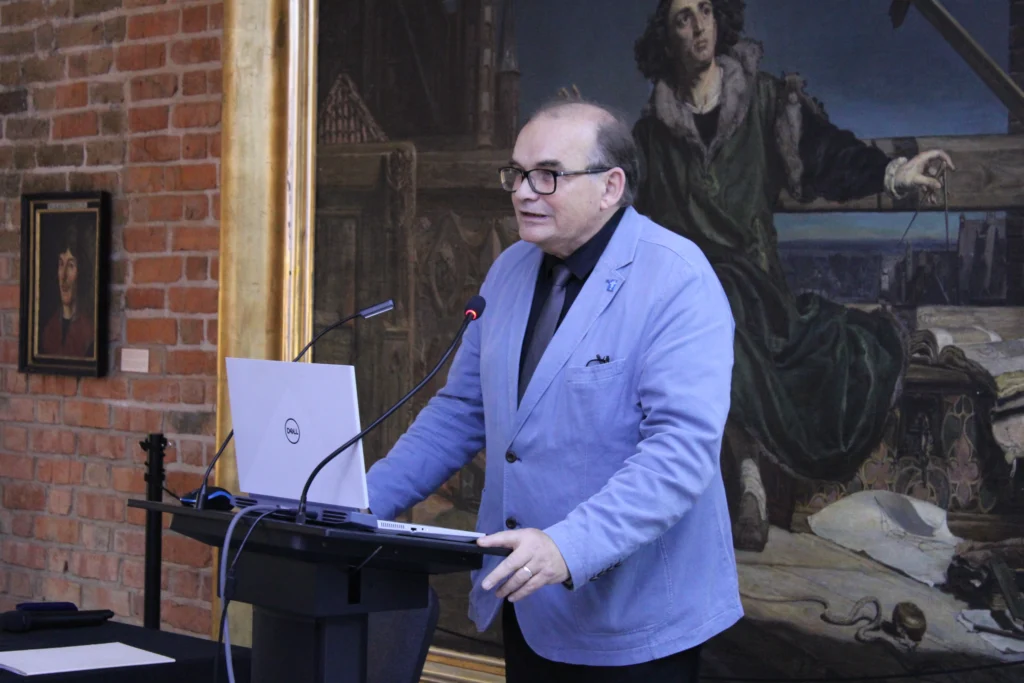
3. Ms. Jagoda Semków: “Following Copernicus: The Search for His Grave and Reburial of the Great Astronomer”
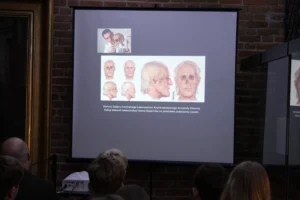
The final speaker, Ms. Jagoda Semków, Head of the Documentation Department and curator at the Nicolaus Copernicus Museum, recounted the history of locating Copernicus’ grave and his reburial.
- Copernicus was originally buried under the cathedral floor in Frombork. The site remained unmarked, and only 38 years after his death did Bishop Marcin Kromer fund an epitaph in 1581, placing it near the altar of St. Bartholomew. This epitaph went missing 54 years later.
- In 1735, the chapter commissioned a new plaque, and in 1760, they added a tondo portrait mounted on the second northern pillar. In 1802, M. Molski and T. Czacki mistakenly discovered the remains of Bishop Henryk Fleming while searching for Copernicus.
- Officers under Napoleon conducted another search in 1807 without success.
- Throughout the 19th century, German historians Leopold Prowe and Hans Schmauch investigated potential burial sites, including the altars of St. Wacław (now St. Cross) and St. Bartholomew.
- Searches at the altar of St. Bartholomew in 1909 and 1939 by the University of Königsberg did not yield announced results.
- In the 1970s, Olsztyn historian Dr. Jerzy Sikorski identified the altar of St. Cross (formerly Wacław) as Copernicus’s final resting place. Archaeological work began in 2004, and in 2005, researchers uncovered remains with a 97% probability of belonging to the astronomer.
- DNA extracted from these remains was compared with hair preserved in Copernicus’s Calendarium Romanum Magnum at Uppsala University, confirming the identity with 100% certainty.
We invite you to join future stops along the Copernicus trail!