Logo Akademii Kopernikańskiej
  • Academy
    • About the Nicolaus Copernicus Academy
      • General Assembly
      • Presidium of the NCA
      • Nicolaus Copernicus Research Center
      • Office of the Nicolaus Copernicus Academy
    • Chambers of the Copernican Academy
      • Chamber of Astronomy and Mathematical-Natural Sciences
      • Chamber of Medical Sciences
      • Chamber of Economics and Management
      • Chamber of Philosophy and Theology
      • Chamber of Legal Sciences
    • Copernican Awards
      • Ambassadors of the Nicolaus Copernicus Academy
    • Collaboration
      • Meet the Partners of the Nicolaus Copernicus Academy
      • Partners in Promotion of the Exhibition
  • World Copernican Congress
    • I World Copernican Congress
      • Programme
      • Establishment of the Nicolaus Copernicus Academy
    • Conference panels
      • Astronomy panel
      • Economics and Management Panel
      • Law Panel
      • Philosophy and Theology Panel
      • Medical Sciences Panel
    • Archive 1st World Copernican Congress
      • YouTube
      • Kopernik TV
      • Chronicle
      • Photo Gallery
  • Around Nicolaus Copernicus
    • Celebration of the birthday of Nicolas Copernicus:
      • 550th anniversary of birth – 1st World Copernican Congress 2023
      • 552nd Anniversary of Birth – Radio Broadcast Inspired by the Exhibition
    • The works of Nicolaus Copernicus
    • Quotes
    • Exhibition
      • Competitions about Nicolaus Copernicus
    • Lectures Along Nicolaus Copernicus’ Trail
      • Lidzbark Warmiński
  • Publishing House
    • Publishing House
    • Information for Authors
    • New Releases
    • Journals
    • Editorial Committee
  • News
  • Contact
  • Polski
  • Deutsch
  • Français
  • Русский
  • Português
  • Español
  • العربية
  • 中文 (中国)
  • Italiano
Menu
Launching Talks on Scientific Cooperation with the Flanders Region

Launching Talks on Scientific Cooperation with the Flanders Region

by admin | Nov 7, 2025 | News

On October 22, 2025, Matthias De Moor, the General Representative of Flanders to Poland and the Baltic States, met with the Acting Secretary General of Nicolaus Copernicus Academy. The meeting, initiated by the guests, aimed to introduce the Academy’s activities more...
Meeting of Mathematical Olympiad Winners at Nicolaus Copernicus Academy

Meeting of Mathematical Olympiad Winners at Nicolaus Copernicus Academy

by admin | Nov 7, 2025 | News

“I hope your path of success will outshine everything our generation could achieve and witness. I sincerely wish that for you.” On October 24, Nicolaus Copernicus Academy hosted a meeting with the winners of the Mathematical Olympiad—young people who have...
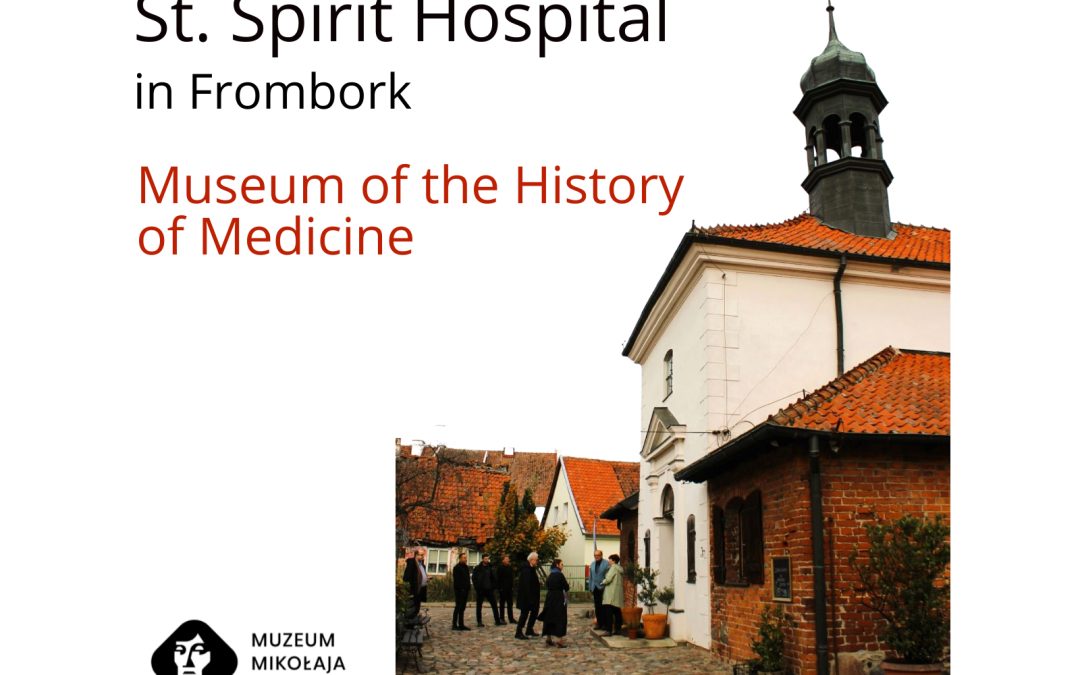
St. Spirit Hospital in Frombork – Museum of the History of Medicine, Nicolaus Copernicus Museum

St. Spirit Hospital in Frombork – Museum of the History of Medicine, Nicolaus Copernicus Museum

by admin | Nov 6, 2025 | News

Located in the eastern part of Frombork, St. Spirit Hospital stands out alongside the Cathedral Hill complex as one of the city’s most remarkable and valuable historical buildings. Founded by the Warmian chapter as a shelter for the sick, poor, and elderly residents,...
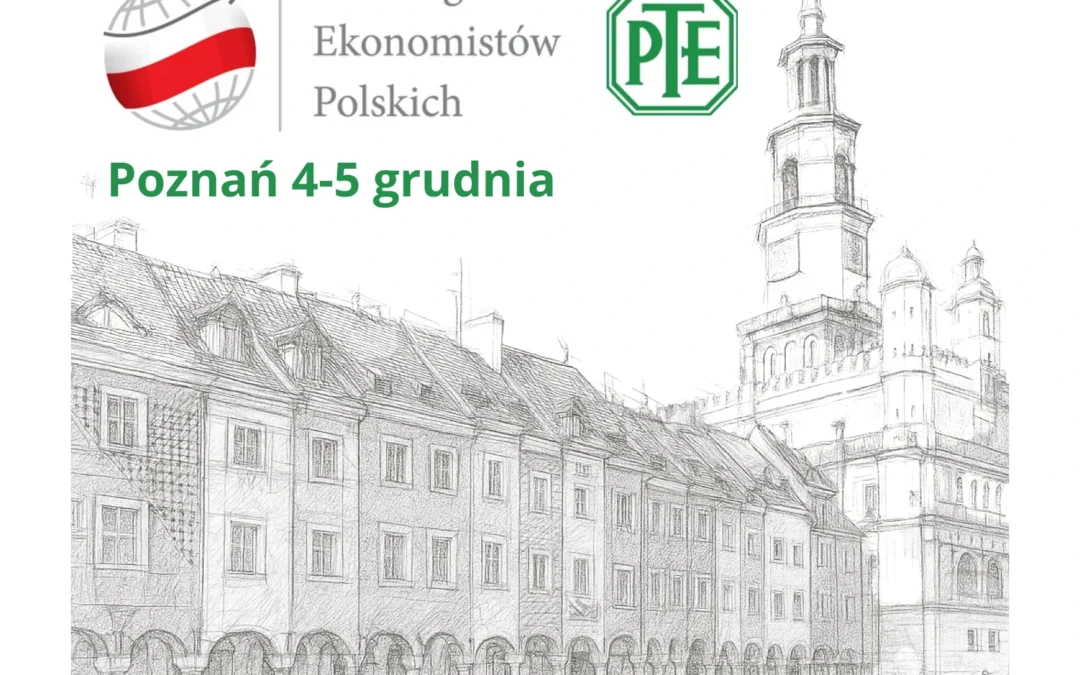
11th Congress of Polish Economists “Economics and the Economy in Times of Uncertainty” Poznań, December 4–5

11th Congress of Polish Economists “Economics and the Economy in Times of Uncertainty” Poznań, December 4–5

by admin | Nov 5, 2025 | News

Nicolaus Copernicus Academy is pleased to recommend the 11th Congress of Polish Economists, organized by the Polish Economic Society, taking place December 4–5, 2025, in Poznań. This event represents the most important gathering of Poland’s economic community. This...

Winners of the International Economics Olympiad Visit Nicolaus Copernicus Academy

Winners of the International Economics Olympiad Visit Nicolaus Copernicus Academy

by admin | Nov 4, 2025 | News

On October 17, 2025, Nicolaus Copernicus Academy in Warsaw hosted the winners of the International Economics Olympiad. On behalf of the Acting Secretary General, Prof. Krzysztof M. Górski, participants were welcomed by Prof. Marek Sarna, a member of the Academy’s...
« Older Entries
Next Entries »

Recent Posts

  • Women in Science
  • On the Minting of coin-A treatise by Nicolaus Copernicus
  • The official position of the NCA on the post-audit statement of the Ministry of Science and Higher Education
  • Today we mark the 553rd anniversary of the birth of Nicolaus Copernicus.
  • Meeting Between the Acting Secretary General of the Nicolaus Copernicus Academy and the President of Poland, Dr. Karol Nawrocki

Recent Comments

No comments to show.
Cudzysłów
Kopernikańskie twierdzenia cosinusów dla trójkątów sferycznych

Rozdział XIV

Twierdzenia III i XII

Cudzysłów
Rozważamy trzy punkty A, B, i C na sferze o promieniu R. Jeżeli połączymy je łukami (wzdłuż kół wielkich) to otrzymamy trójkąt sferyczny ABC.
Rozważamy trójkąty, które są prostokątne i mają boki krótsze niż półokrąg, jak na rysunku.
Cudzysłów
III Twierdzenie Kopernika:

W prostokątnym trójkącie sferycznym ABC na sferze o promieniu R (gdzie kąt C jest prosty) zachodzą następujące proporcje pomiędzy długościami boków:

AB / BC = R / BC

Czyli że stosunek przeciwprostokątnej do jednej z przyprostokątnych jest równy stosunkowi promienia do drugiej przyprostokątnej. Znaczy to, że jeżeli znamy dwa boki, to możemy znaleźć trzeci.

[Kopernik, Mikołaj (1473-1543), “Mikołaja Kopernika Toruńczyka O obrotach ciał niebieskich ksiąg sześć”,  Kujawsko-Pomorska Biblioteka cyfrowa, UMK, 1854, Rozdział XIII, str.63-64]

Cudzysłów
Czyli Kopernik dowiódł szczególną wersję twierdzenia cosinusów dla trójkątów sferycznych.  Teraz możemy  założyć że promień sfery R =1.

Mierzymy w radianach długość boku (łuku) leżącego naprzeciwko danego kąta jako łuku na sferze (od środka sfery) i mamy:

AB = c         BC = a         AC = b
(tutaj a, b, c są miarami kątów AOB, BOC, AOC w radianach)

Jeżeli kąt C jest prosty, możemy zapisać twierdzenie Kopernika jako

cos c / cos b = cos a

[Kopernik, Mikołaj (1473-1543), “Mikołaja Kopernika Toruńczyka O obrotach ciał niebieskich ksiąg sześć”,  Kujawsko-Pomorska Biblioteka cyfrowa, UMK, 1854, Rozdział XIII, str.63-64]

Cudzysłów
Twierdzenia Pitagorasa dla trójkątów sferycznych

Znaczy to, że jeżeli znamy dwa boki, to możemy znaleźć trzeci.  To jest sferyczna wersja twierdzenia Pitagorasa, które możemy zapisać jako:

cos c = cos b   cos a

Cudzysłów
Mamy też ogólniejsze twierdzenie cosinusów dla trójkątów sferycznych na sferze o promieniu R =1, gdzie kąty α, β, γ są kątami sferycznymi trójkąta ABC.

XII Twierdzenie Kopernika:
cos c = cos a   cos b + sin a   sin b   cos γ

Znaczy to, że jeżeli znamy dwa boki i przynajmniej jeden kąt, to możemy znaleźć trzeci, co jest sferyczną wersją twierdzenia cosinusów dla wszystkich trójkątów płaskich.


[Kopernik, Mikołaj (1473-1543), “Mikołaja Kopernika Toruńczyka O obrotach ciał niebieskich ksiąg sześć”,  Kujawsko-Pomorska Biblioteka cyfrowa, UMK, 1854, Rozdział XIII, str.63-64]

Akademia Kopernikanska
Do góry
Polityka prywatności
Polityka Cookies
Konkursy
Deklaracja Dostępności
Kontakt
biuro@akademiakopernikańska.gov.pl
office@nca.gov.pl
+48 782 950 350
Kontakt dla mediów
media@akademiakopernikanska.pl
+48 782 950 050
Social Media
  • Follow
  • Follow
  • Follow
  • Follow
  • Follow
Cudzysłów
Copernican Cosine Theorems for Spherical Triangles

Chapter XIV

Theorems III and XII

Cudzysłów
We consider three points A, B, and C on a sphere of radius R. If we connect them by arcs (along great circles), we obtain a spherical triangle ABC.
We consider right-angled spherical triangles with sides shorter than a semicircle, as shown in the figure.
Cudzysłów
Copernicus’ Third Theorem:

In a right-angled spherical triangle ABC on a sphere of radius R (where angle Cis a right angle), the following proportion between the sides holds:

AB / BC = R / BC

That is, the ratio of the hypotenuse to one leg equals the ratio of the radius to the adjacent leg. This means that if we know two sides, we can determine the third.

[Citation: Copernicus, Nicolaus (1473–1543), De revolutionibus orbium coelestium, Kujawsko-Pomorska Digital Library, UMK, 1854, Chapter XIII, pp. 63–64]

Cudzysłów
In other words, Copernicus proved a special case of the spherical law of cosines.
Now, we may assume that the sphere has radius R =1.

We measure in radians the length of the side (arc) opposite to a given angle as an arc on the sphere (from the sphere’s center). We have:

AB = c         BC = a         AC = b
(here a, b, c are the measures of angles AOB, BOC, AOC in radians)

If angle C is right, we can write Copernicus’ theorem as

cos c / cos b = cos a

[Citation: Copernicus, Nicolaus (1473–1543), De revolutionibus orbium coelestium, Kujawsko-Pomorska Digital Library, UMK, 1854, Chapter XIII, pp. 63–64]

Cudzysłów
Theorem of Pythagoras for spherical triangles

That is, if we know two sides, we can find the third.This is the spherical version of the Pythagorean theorem, which can be written as:

cos c = cos b   cos a

Cudzysłów
We also have the general spherical law of cosines for triangles on a sphere of radius R=1, where α, β, γ are the spherical angles of triangle ABC.

Copernicus’ Twelfth Theorem:
cos c = cos a   cos b + sin a   sin b   cos γ

That is, if we know two sides and at least one angle, we can determine the third, which is the spherical version of the law of cosines for all plane triangles.
 

[Citation: Copernicus, Nicolaus (1473–1543), De revolutionibus orbium coelestium, Kujawsko-Pomorska Digital Library, UMK, 1854, Chapter XIII, p. 73]

Akademia Kopernikanska
Up
Privacy Policy
Cookies Policy
Contests
Accessibility Declaration
Contact
biuro@akademiakopernikańska.gov.pl
office@nca.gov.pl
+48 782 950 350
Contact for media
media@akademiakopernikanska.pl
+48 782 950 050
Social Media
  • Follow
  • Follow
  • Follow
  • Follow
  • Follow
This site uses cookies to provide services at the highest level. By continuing to use the website, you agree to their use in accordance with the privacy policy.