“We don’t do philosophy, don’t consider only certain phenomena – we base our work on mathematics, physics, and concrete foundations.”
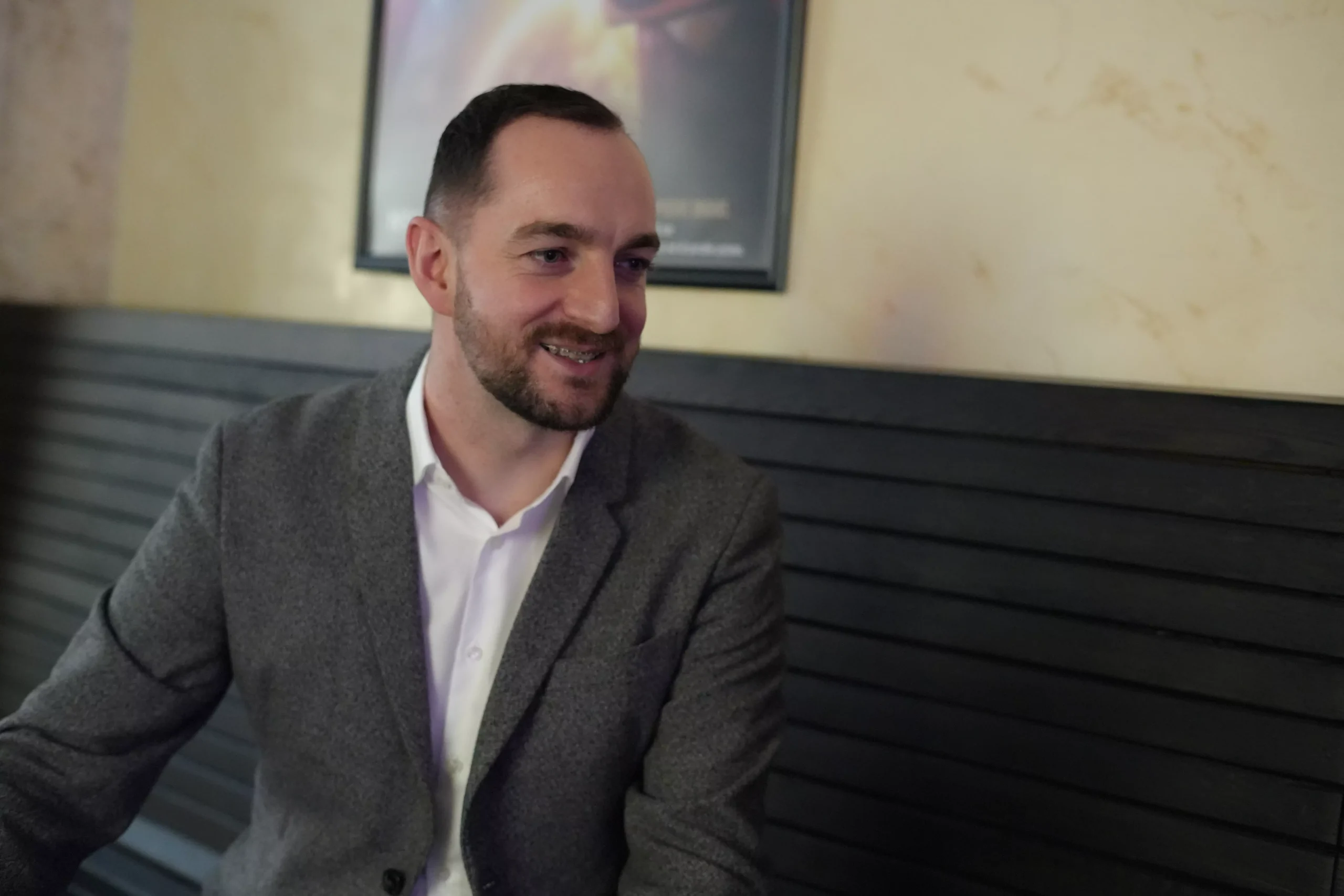
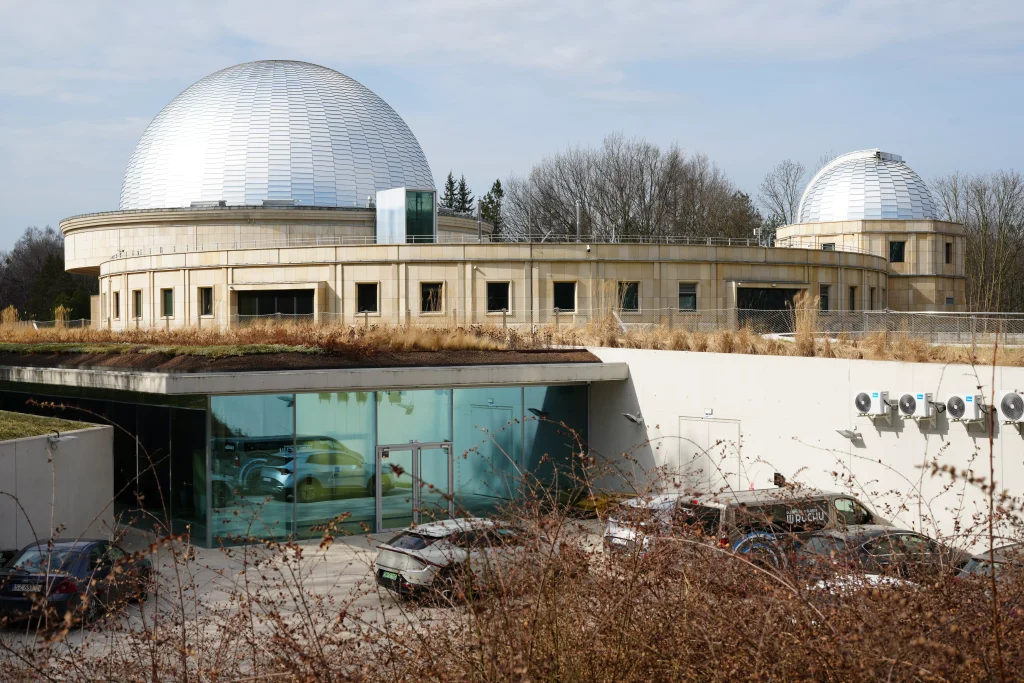
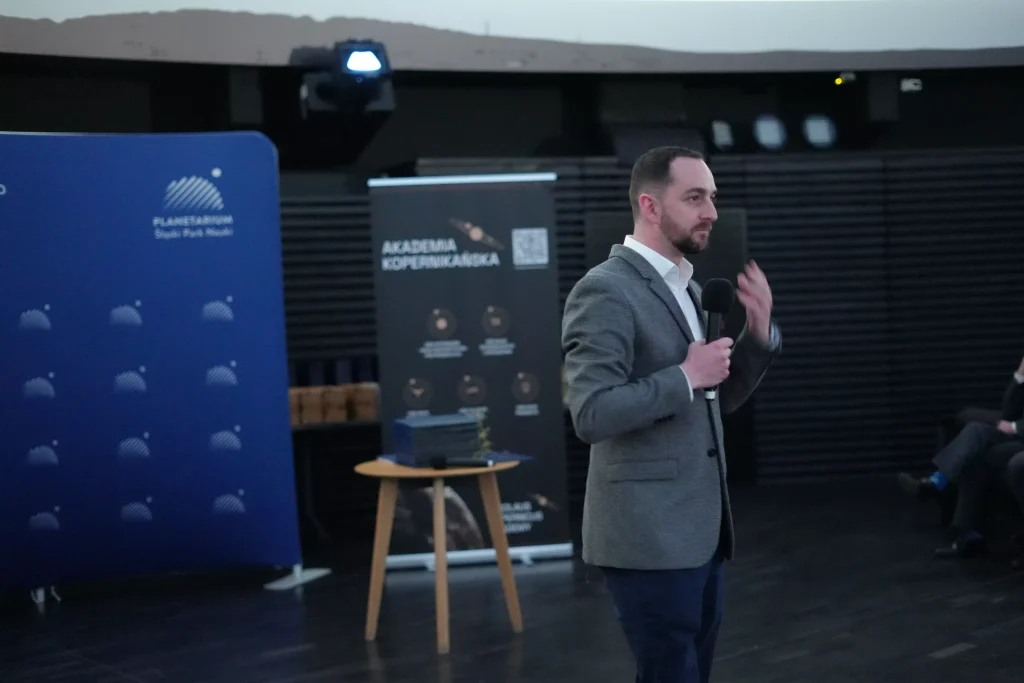
During the Olympic weekend – on the 15th of March 2026 – at the Silesian Planetarium, which coincided with the 69th International Olympiad on Astronomy, we had the opportunity to converse with one of the most promising Polish astronomers of the new generation – Dr. Przemysław Mróz. His scientific career – which is focused on researching exoplanets, black holes, and dark matter – is associated with the Astronomical Observatory of the University of Warsaw.
In our conversation, we ask Dr. Mróz about being inspired by Nicolaus Copernicus, as well as about the evolution of his career, and his scientific aspirations. We inquire into the way in which youthful passion transforms into a conscious choice of lifepath.
Dr. Przemysław Mróz is an astronomer working in a group led by Prof. Andrzej Udalski. Dr. Mróz received his doctorate at the Astronomical Observatory of the University of Warsaw. His thesis has been recognized by the Scientific Council of the University of Warsaw and the International Astronomical Union as one of the best in the world in 2019, and has been published in prestigious science journals such as Nature. Dr. Mróz is also a laureate of the Frank Wilczek Award of the Jagiellonian University and the Kos[PT1] ciuszko Foundation. His research is focused on the use of gravitational microlensing in the study of extrasolar planets, black holes, and dark matter.
Q: I say “Copernicus” – you say…?
Dr. Przemysław Mróz:
The heliocentric system.
Q: The first question we ask is always about Copernicus. Did he have any influence on your work and your choice of scientific career?
Dr. Przemysław Mróz:
The fact that our compatriot was an excellent scientist and astronomer is certainly inspiring in some sense. The theories he worked on continue to encourage research into the Universe. Astronomy itself first began to interest me when I was still a teenager in secondary school. This passion for observing the sky later transformed into a career. Today I really do work on discovering mysteries of the cosmos, new phenomena, and new heavenly bodies.
Copernicus also inspires with his introduction of the scientific mathematical method, which was based in concrete calculations, foundational mathematics, and geometry. It is of great importance, although people often do not realize this.
We usually imagine Copernicus to simply have “said some things” – as in: let’s replace Earth with the Sun as the centre of the system. We don’t realize, however, that his theory was supported by solid mathematics and proof. This is precisely what’s important in the scientific method.
We don’t do philosophy, don’t consider only certain phenomena – we base our work on mathematics, physics, and concrete foundations.
Q: When did you develop this enthusiasm? When did you realize that the tools of science – mathematics and physics – can change one’s perspective on the world, and that you can have an impact on that? Was it at the Olympiad, given that you were introduced as an Olympic veteran on today’s gala?
Dr. Przemysław Mróz
Of course, the Olympiad on Astronomy played a large part in that. We the General Committee of the Olympiad on Astronomy make efforts to formulate the tasks so that they concern contemporary astronomy and cutting-edge research – that is, research on the verge of our understanding. We hope that it will inspire students, as it inspired me. Taking part in the Olympiad also puts you in the presence of professional astronomers, and shows you that astronomy is, by all means, a valid career path.
I also had the good fortune, already as a university student, of ending up at the Astronomical Observatory of the University of Warsaw, where astronomy is practiced at a very high level. Our research at the Observatory really is world-class. Already since my first years at university and during my doctoral studies, I have had the opportunity to take part in a lot of research and in many discoveries as part of the OGLE project, led by Professor Udalski.
Thanks to this, I could see how to really do science on the highest international level, and how not to feel ashamed the work we do, since, in fact, it facilitates the continued development of astronomy. This work is not derivative – all our research is pioneering. It is a great pleasure and a worthwhile experience to be able to join a science team of this kind already as a university student or doctoral candidate.
Q: Your words remind us of the Nicolaus Copernicus World Congress and the scientist who took part in it. What are, in your opinion, some ways in which young people might be encouraged to believe that research paths are fascinating, so that they would want to follow a course similar to yours?
Dr. Przemysław Mróz:
Certainly an important fact is that although astronomy is my job, it is also – and above all – my passion. I think that success in every discipline requires this kind of passion, or even a certain obsession. It is what motivates us to be the best, and to gain recognition, whether scientific or professional. This does not only apply to working as a scientist, but to any discipline and to all professions.
Curiosity about the world is key. Stoking this passion in young people is, of course, firstly reliant on their parents and immediate environments. It has to be said, however, that a huge part in this process should also be played by schools.
Everyone’s talents are different, but all of them should be fostered from the very beginning. For this reason, we are very happy with the fact that, according to the planned reform of the school programme, astronomy is to return to middle schools. Thanks to this, we’ll be able to discover students interested in that topic already at an early stage of schooling, and to provide them with opportunities to develop their skill.
Q: I have one more question: is there a particular, grand dream you have as an astronomer – something you would want to achieve or learn?
Dr. Przemysław Mróz:
I’m lucky in than I managed to make many discoveries already, which is not an opportunity that all scientists have had. Sometimes it’s a question of luck – there are people who devote their whole lives to one specific issue which later turns out to be a dead end, although this, too, is important in science.
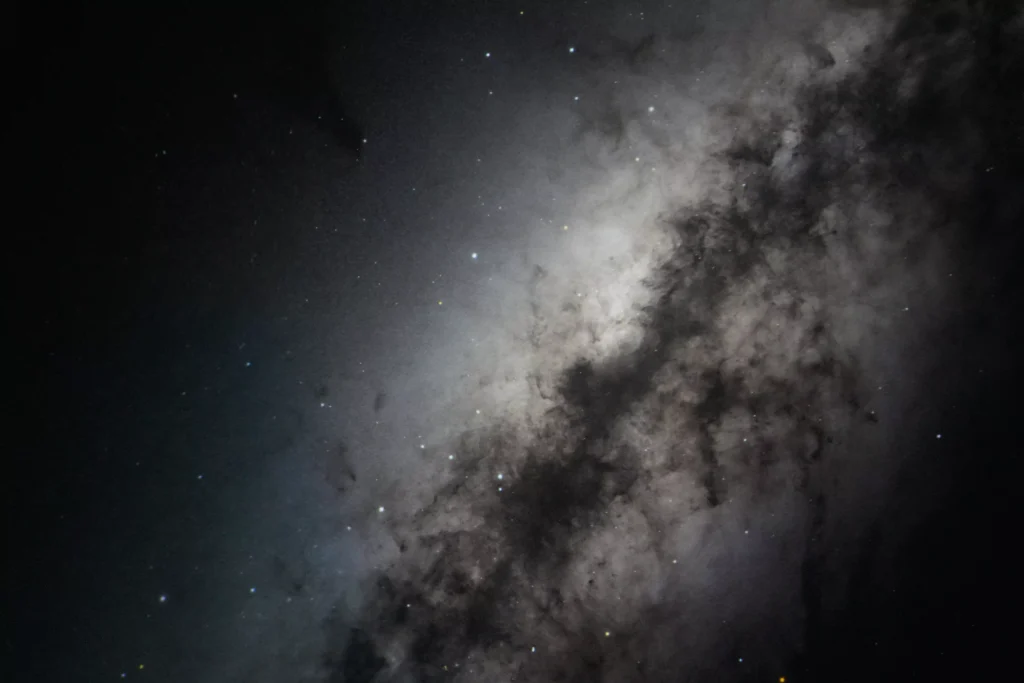
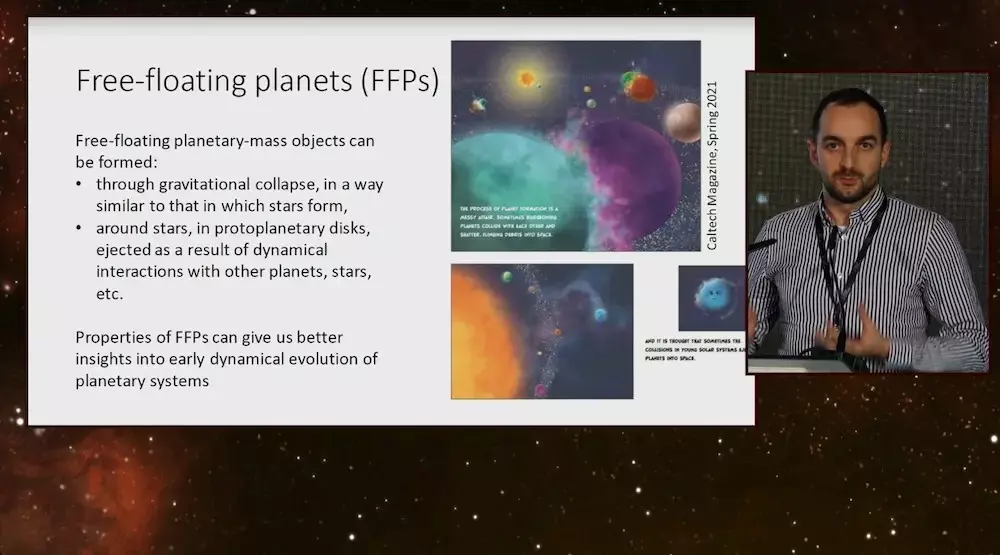
When it comes to short-term plans, I’m currently working on an entirely new subject. I enjoy shifting between research topics, and don’t want stay isolated in one discipline for years. The discovery of rogue planets is a success of years past, but now I concentrate on investigating our galaxy in search of black holes, and on researching them. I have been doing this for a couple of years using new instruments developed at the European Southern Observatory (ESO), which hosts some of the largest telescopes in the world. We attempt to use innovative research techniques to broaden our wealth of knowledge and make further discoveries. I hope that, in the next ten to twenty months, you’ll be able to hear about our new findings precisely about black holes. On a broader timescale, in truth, I do not know what to expect.
In my opinion, science often involves precisely those discoveries which we cannot properly imagine yet. Because of this, I do not know what I’ll be doing in a decade or two, but I will definitely be trying to ensure that it is cutting-edge science – research that test our knowledge and allows us to discover new, as yet unknown phenomena across the Universe.
Q: Are there some discoveries which every astronomer dreams of making?
Dr. Przemysław Mróz:
Astronomy does still pose many mysteries and questions, which we cannot uncover and answer yet.
Take, for example, the simplest one: is there life beyond Earth? Hundreds of scientist are working on this issue every day, investigating other planets and stars. We also ask about the way in which planetary systems and galaxies form, and what the future of our Universe is. These are basic questions, which still remain largely unanswered, all the while stirring the minds and imaginations of astronomers worldwide.
Q: Not every science career path is straightforward – at times, circumstance dictates that we change our interests. What was your experience? Did you keep to a specific plan from the beginning?
Dr. Przemysław Mróz:
It’s true – we can never know which field will lead us to an eventual breakthrough. Sometimes, we end up facing dead ends, and need to turn back. My path was rather typical of a scientist: a doctorate, followed by postdoctoral fellowship abroad. Traveling out of the country is incredibly important – it allows you to encounter new people, different research methods and topics. With that fresh perspective, you can return to your alma mater and develop your own ideas.
It’s worth saying that young people should not be discouraged by a lack of success. Science often works through circumstance. Sometimes, one needs to step back, change their approach, and try something entirely new.
Q: Did profound questions find particularly fertile ground at the Nicolaus Copernicus World Congress? Following the event, did anyone already manage to touch upon the issues which were raised there?
Dr. Przemysław Mróz:
The Congress was attended by some of the most world-renowned astronomers, who discussed some of the most important questions of contemporary science. We need to remember, however, that these issues did not arise at the meeting itself – they have existed for years and have been tackled by hundreds of researchers.
Nevertheless, astronomy keeps progressing continuously and quickly. More or less every day, new important publications appear, and further discoveries or new research techniques are announced. Because of all this, our wealth of knowledge continues to grow, and we draw ever nearer to answering the imposing questions we ask ourselves.
Dear Doctor Mróz, we thank you for your time and wish you further scientific success.